
Pekin Garage Door Guide
Why Pekin's Older Garage Doors Fail in Winter
Pekin's 1960s-70s housing stock and cold winters mean torsion springs fail fast. See what local conditions do to garage doors here and how to fix it right.
- Licensed & Insured
- Same-Area Service Calls
- Upfront Pricing
Season by Season
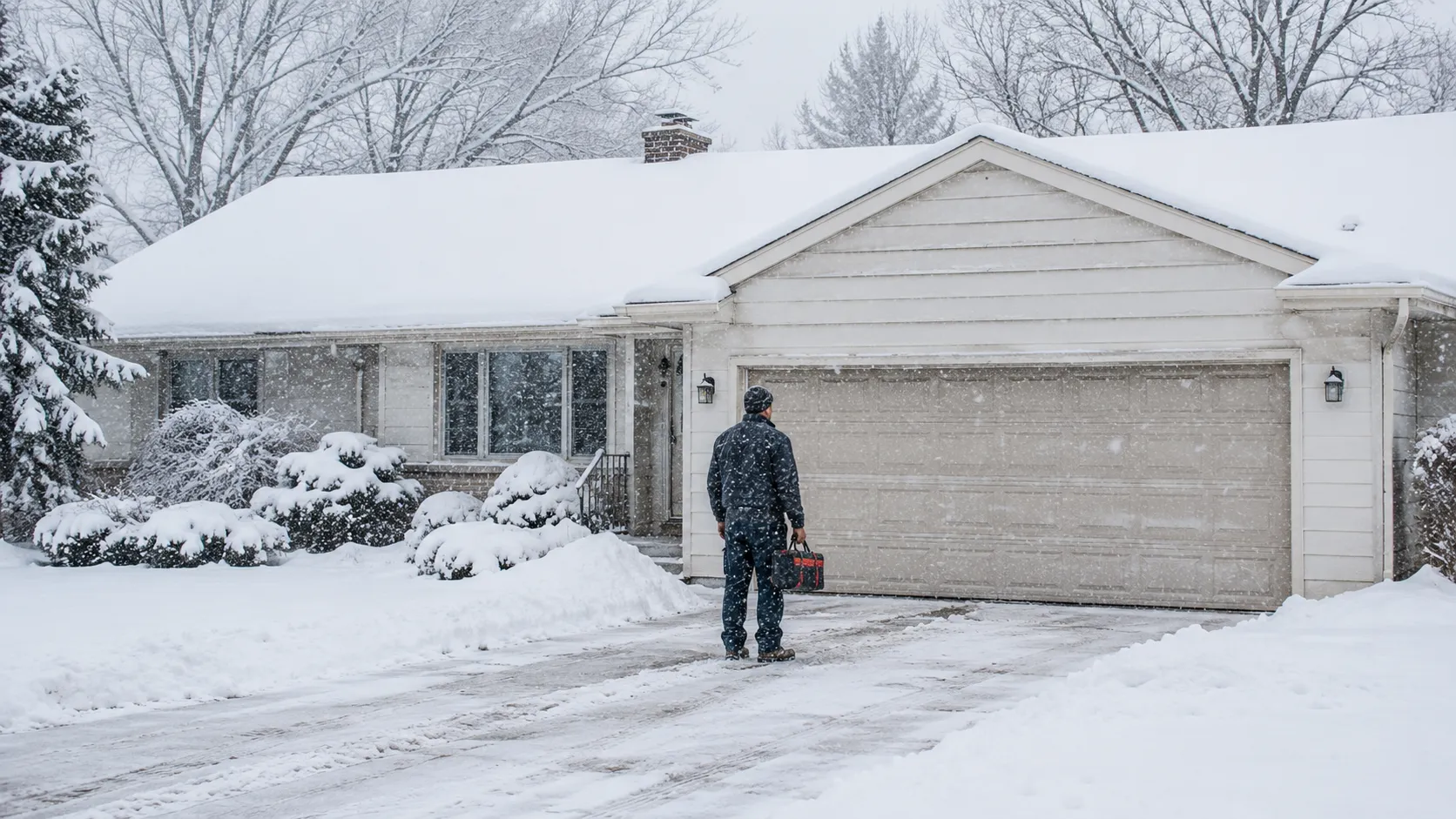
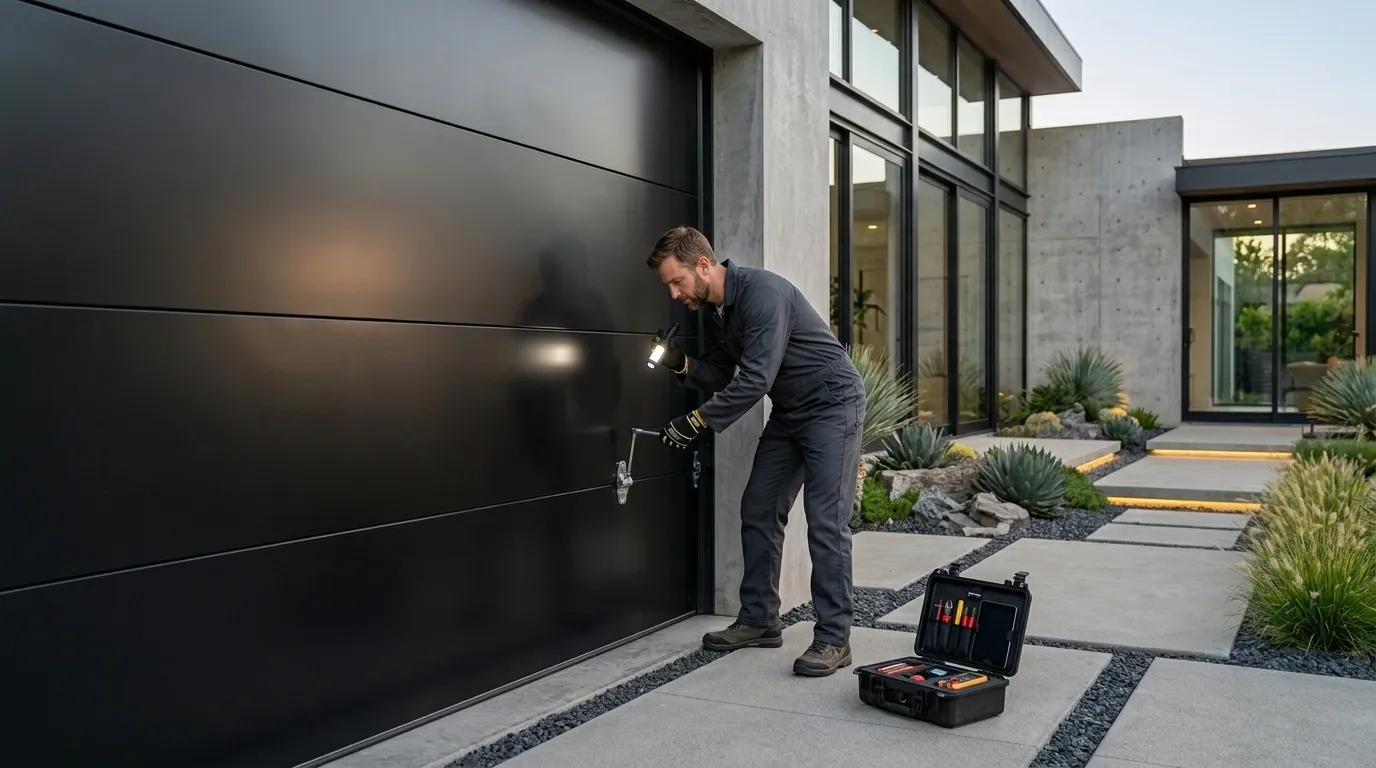
Pekin sits in a cold, moderate climate band, and that shows up on the truck schedule. Late fall through February is when torsion springs give out - steel loses tension as it contracts in the cold, and a spring that was already tired from twenty winters just snaps on the coldest morning of the week. Spring brings the opposite problem: thaw cycles swell wood jambs and trim on the older houses, which throws the door out of square against the track.
Summer is quieter for springs but harder on openers, since garages here trap heat and the gears and capacitors run warmer than the manufacturer rated them for. Fall is when we tell people to get ahead of it - check cables, check rollers, check the bottom seal - because once the cold sets in, a small problem turns into a no-lift call fast. None of this is dramatic weather.
It's ordinary Illinois cold doing ordinary damage to hardware that's been sitting in a garage since before anyone reading this owned the house.
The Situation
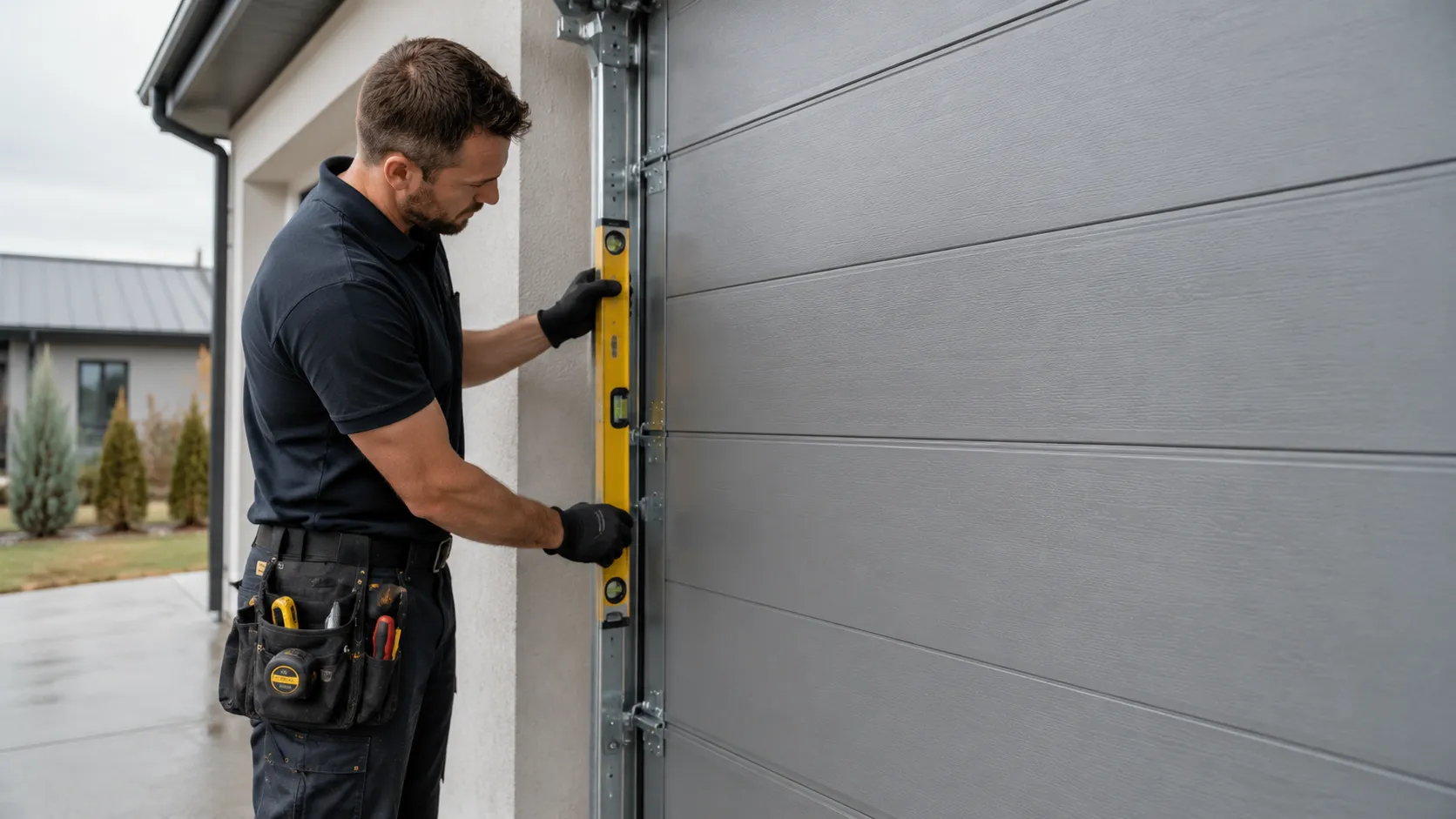
Housing across the Pekin service area was mostly built between 1938 and 2002, with the median year sitting at 1964. That means the bulk of the doors we work on - across the 25 named areas we cover - were installed on hardware built for a mid-century garage: single-car openings, lighter panels, torsion springs sized to a lift weight that's often changed since. Homeowners add insulation, swap in a heavier steel or composite door, or bolt on a modern opener, and none of that hardware gets resized to match.
The spring that lifted a 1968 door fine is now working harder than it was built for. With 27,283 owner-occupied houses in the area and a median household income of $69,906, most of the calls we get aren't for full replacements - they're repairs on original or near-original hardware that's finally hit its limit. That's not a knock on the houses.
It's just what forty-plus-year-old torsion setups do eventually, especially once winter starts pulling tension out of steel that's already fatigued.
Where People Go Wrong
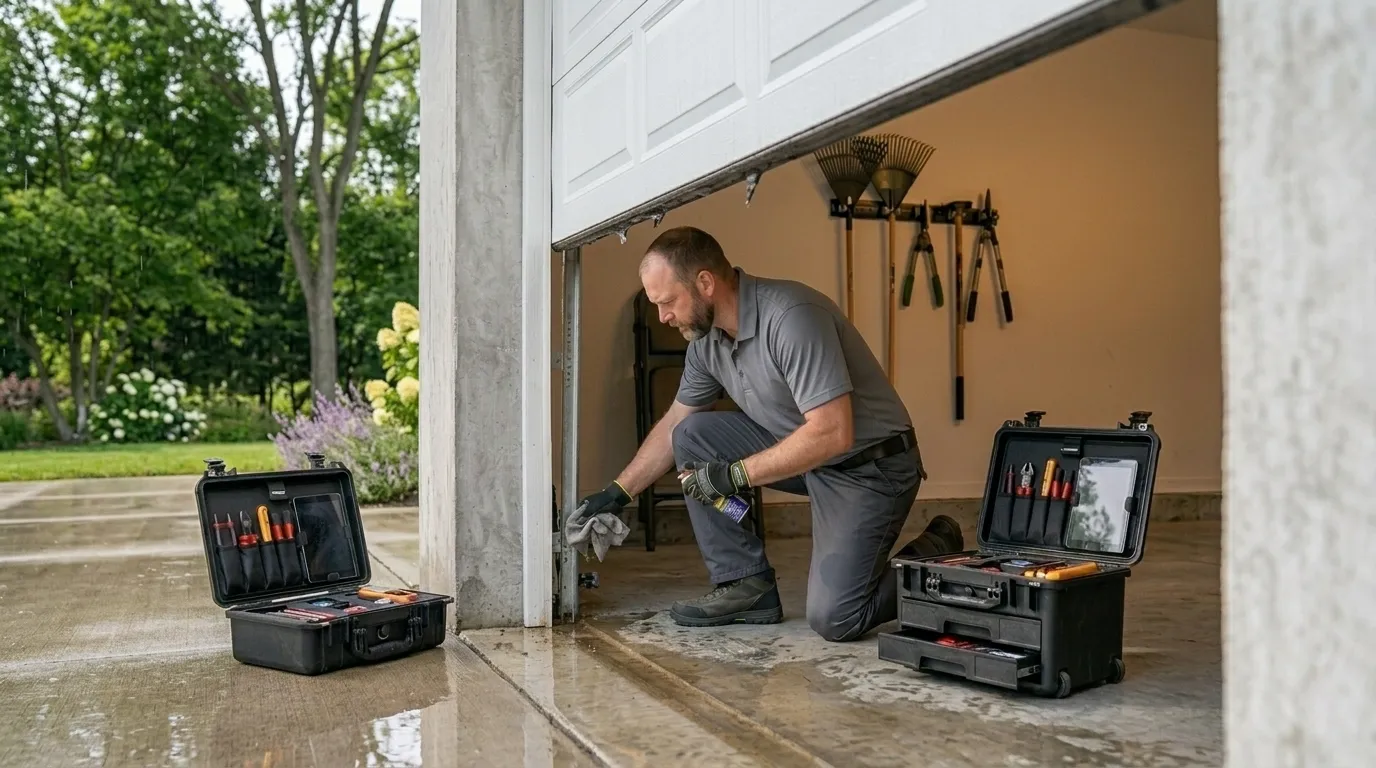
The most common mistake we see is someone trying to re-tension or replace a torsion spring themselves in the cold, without realizing the bar under load has more stored force in a brittle winter spring than the same spring in July. Second most common: WD-40 on the track instead of a proper lubricant, which attracts grit and makes the roller noise worse within a month. Third, and this one's specific to the age of housing here - people assume a door built in the 1960s or 70s can take a modern insulated retrofit without any change to the spring or opener.
It usually can't, not without adjustment. We also see folks wait too long on a slow-closing door, assuming it's just cold and stiff, when it's actually a cable starting to fray. A frayed cable on an old drum doesn't announce itself until it lets go.
If your door has felt heavier or slower over the past month, that's worth a call before the cold gets worse, not after.
What Local Conditions Do
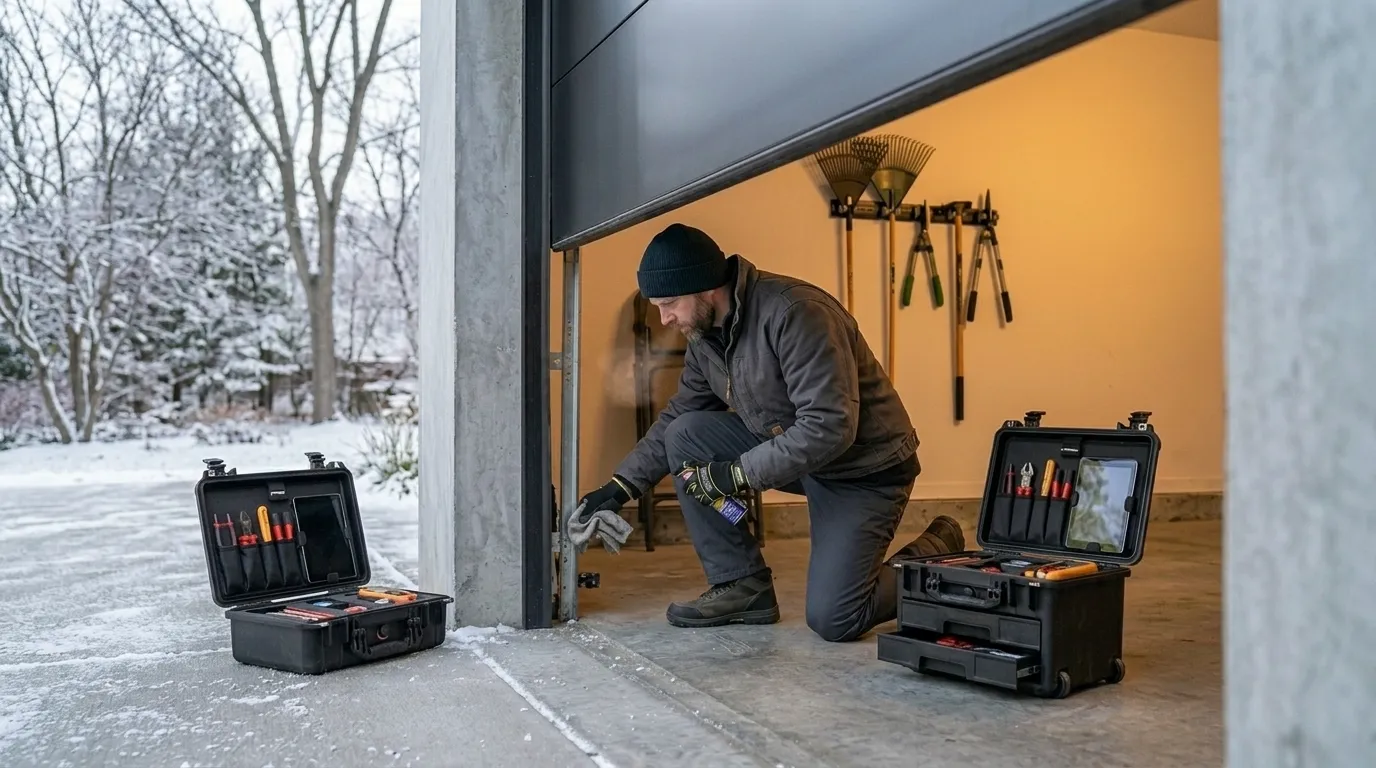
Cold contracts steel. That's the short version of what a moderate-cold winter does to a torsion spring, and it's why failures cluster from December through February rather than spreading evenly across the year. On older hardware - and given the 1964 median build year here, a lot of what we service is older hardware - that contraction finds the weakest point in a spring that's already lost some temper from decades of cycling.
Out toward Mapleton or South Pekin, five miles either direction, or up toward North Pekin, houses built in that same mid-century window carry the same builder-grade doors and the same risk. We don't do custom wood door refinishing, and if a door's frame has warped enough that the track can't be re-squared, replacement usually makes more financial sense than another repair - we'll tell you that straight instead of billing for a fix that won't hold. Most of the time, though, a seasonal service call catches the spring or cable before it fails outright.
How We Can Help
Garage Door Repair
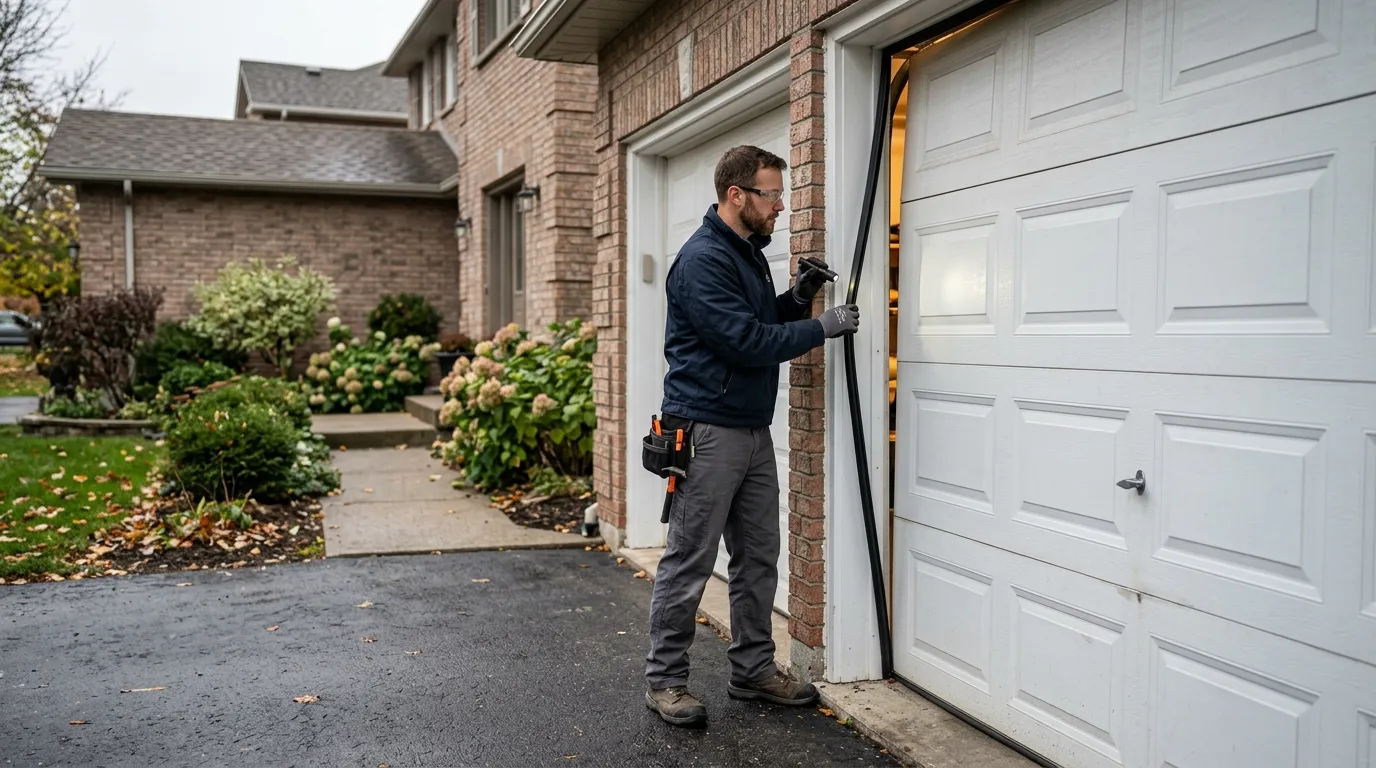
Springs, cables, tracks, rollers, and openers fixed by a tech who explains the problem before touching anything.
Learn more →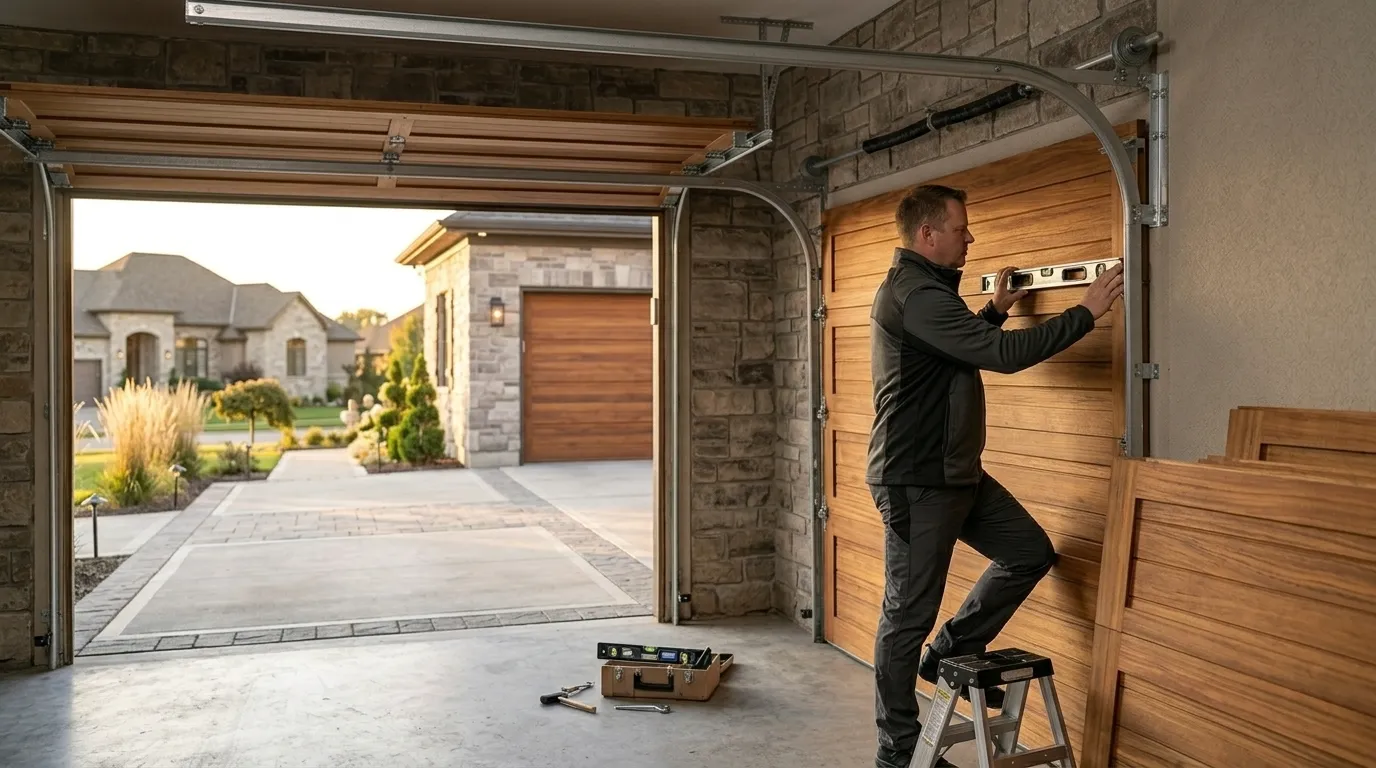
Garage Door Installation
New sectional doors sized and installed for the housing stock actually built in this area.
Learn more →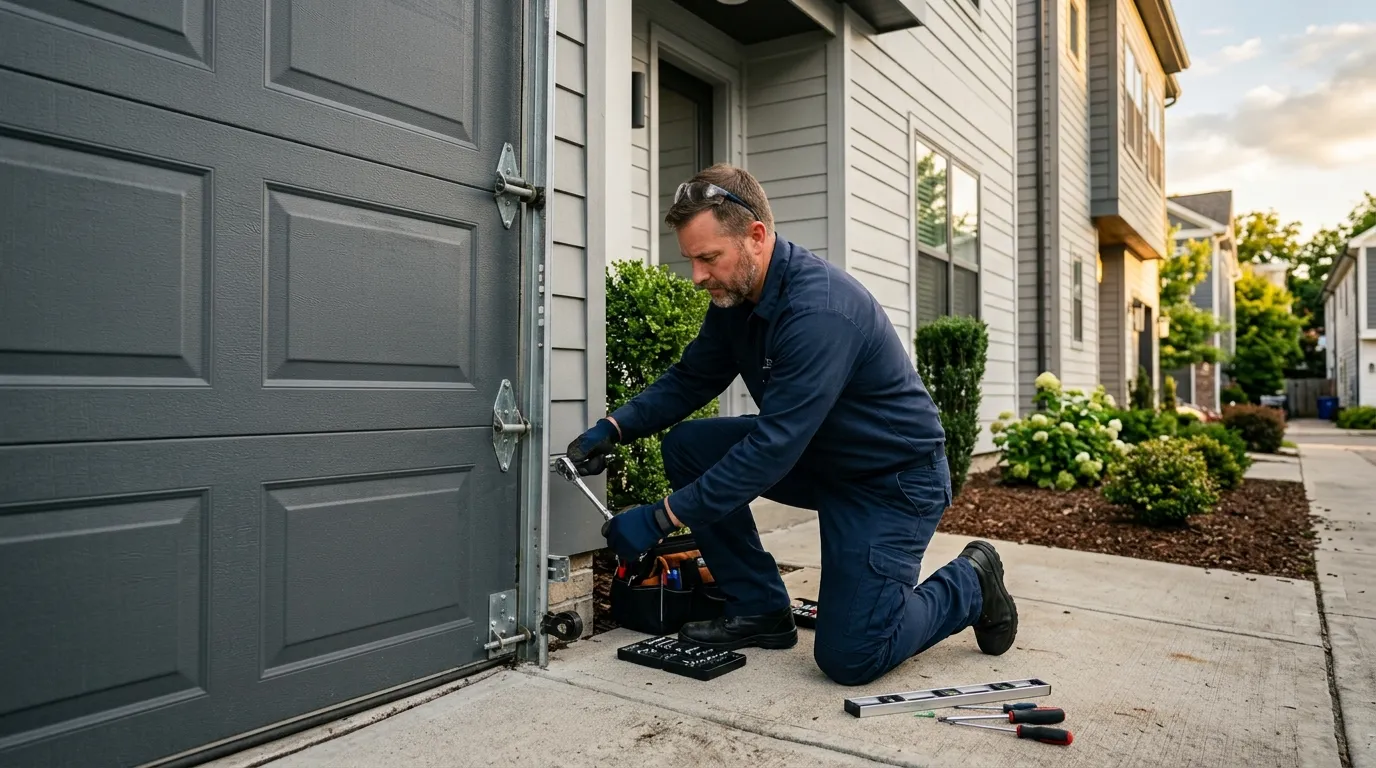
Garage Door Service
Tune-ups, lubrication, and safety checks that catch a small problem before it becomes a service call.
Learn more →Frequently Asked Questions
Why does my garage door spring break every winter around the same time?
Cold steel loses tension faster than warm steel, and a spring that's already fatigued from years of cycling has less margin to give. In Pekin's cold-moderate climate, that margin usually runs out in December or January. If your spring broke once in winter, expect the replacement to be more resilient, but it's still a part that wears with cold cycling over time.
My house was built in the 1960s - does that affect garage door repair?
Often, yes. Median build year across the Pekin area is 1964, and a lot of that stock still has original or near-original torsion hardware sized for lighter, uninsulated doors. If you've since added insulation or a heavier door, the spring may be under-sized for the new weight, which shows up as a hard lift, especially in cold weather.
Is it worth repairing an old door instead of replacing it?
Usually, yes, if the track and frame are still square. Most of our calls in the area are repairs on original hardware, not full replacements. But if the frame's warped from decades of settling, a repair won't hold and replacement is the more honest answer.
How often should I get my garage door serviced given the weather here?
Fall, before the cold sets in, is the best time - catching a fraying cable or a tired spring before winter cold makes it fail outright saves a no-lift morning. A quick seasonal check costs less than an emergency call in January.
Have a Door That Needs a Second Opinion?
Call and describe what it is doing - we will tell you what it likely is.