
Service
Garage Door Service Built Around Pekin's Older Housing Stock
Garage door service for Pekin homes built mostly between 1938 and 2002, matched to the cold-climate wear that hits original hardware on this side of Illinois.
- Licensed & Insured
- Same-Area Service Calls
- Upfront Pricing
The Symptom
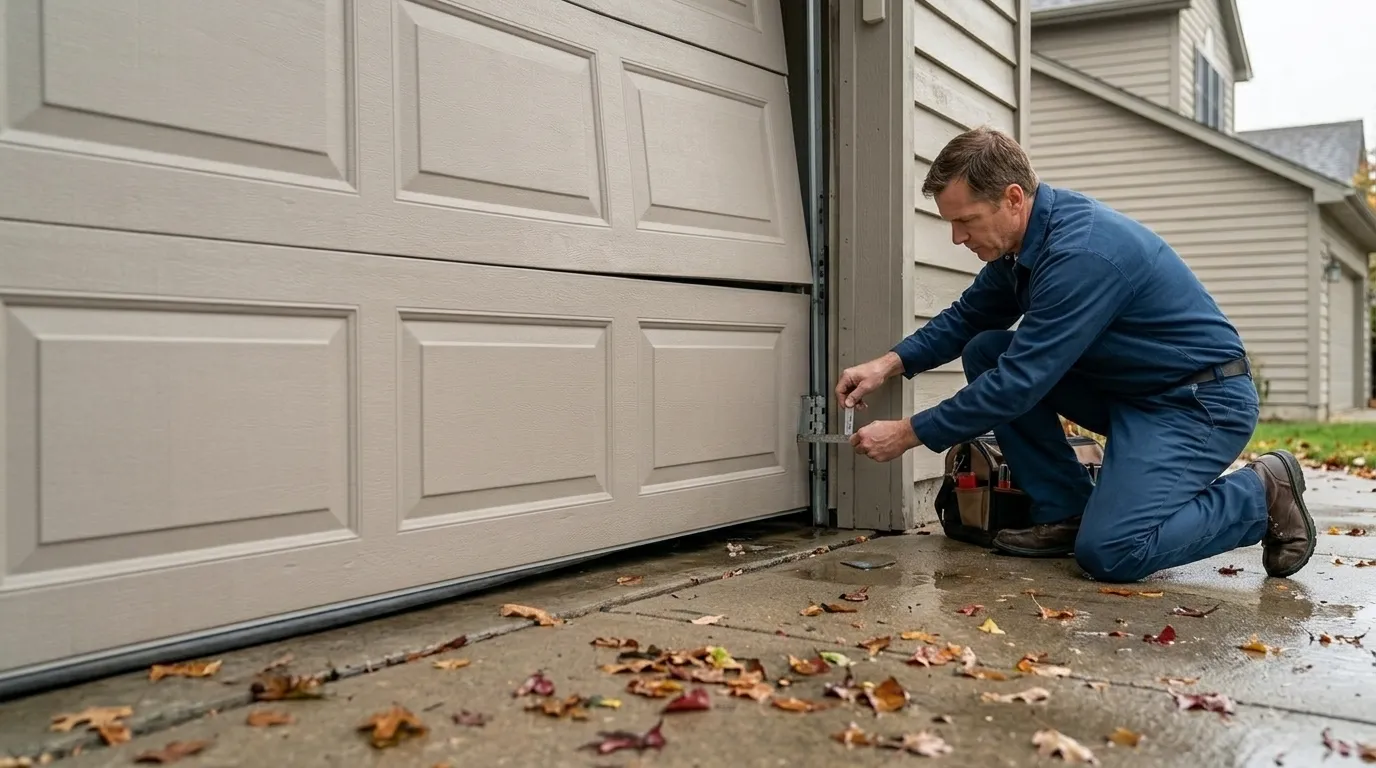
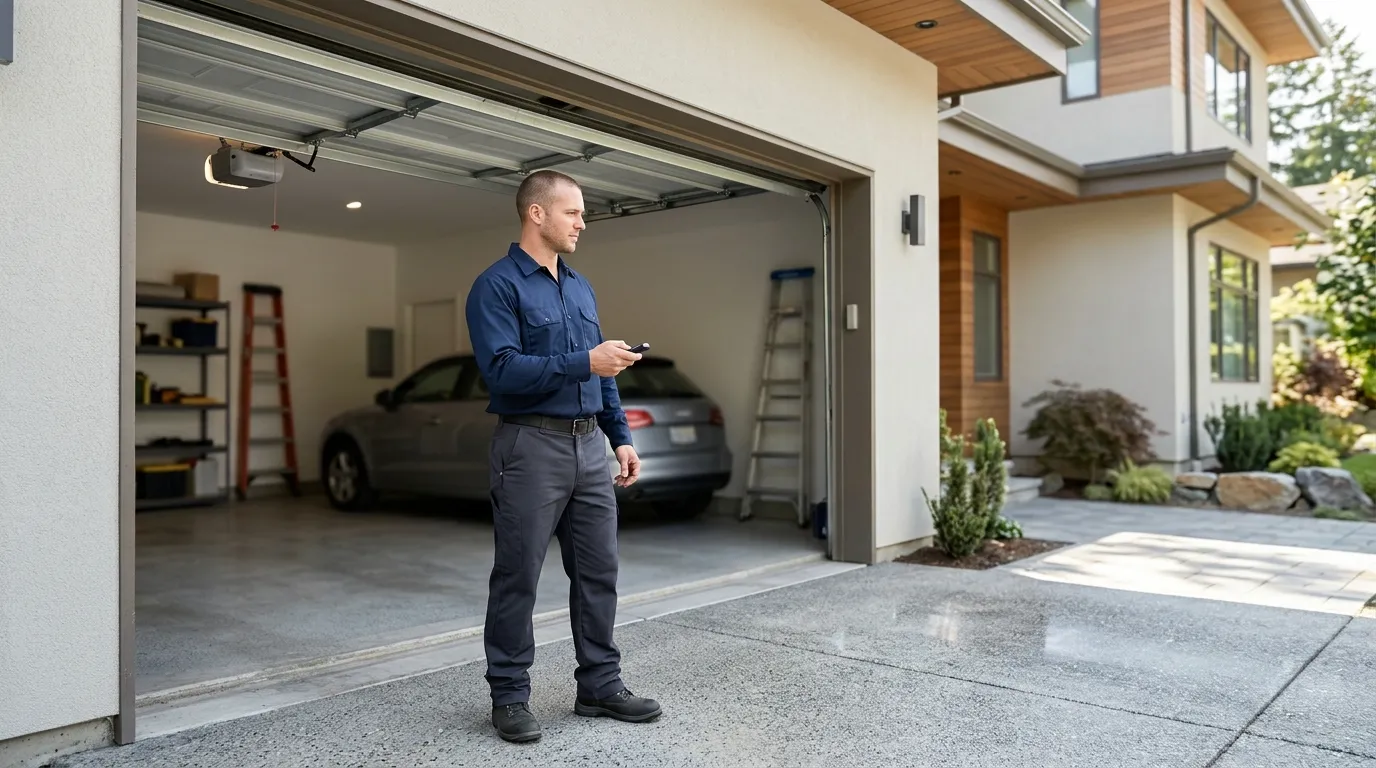
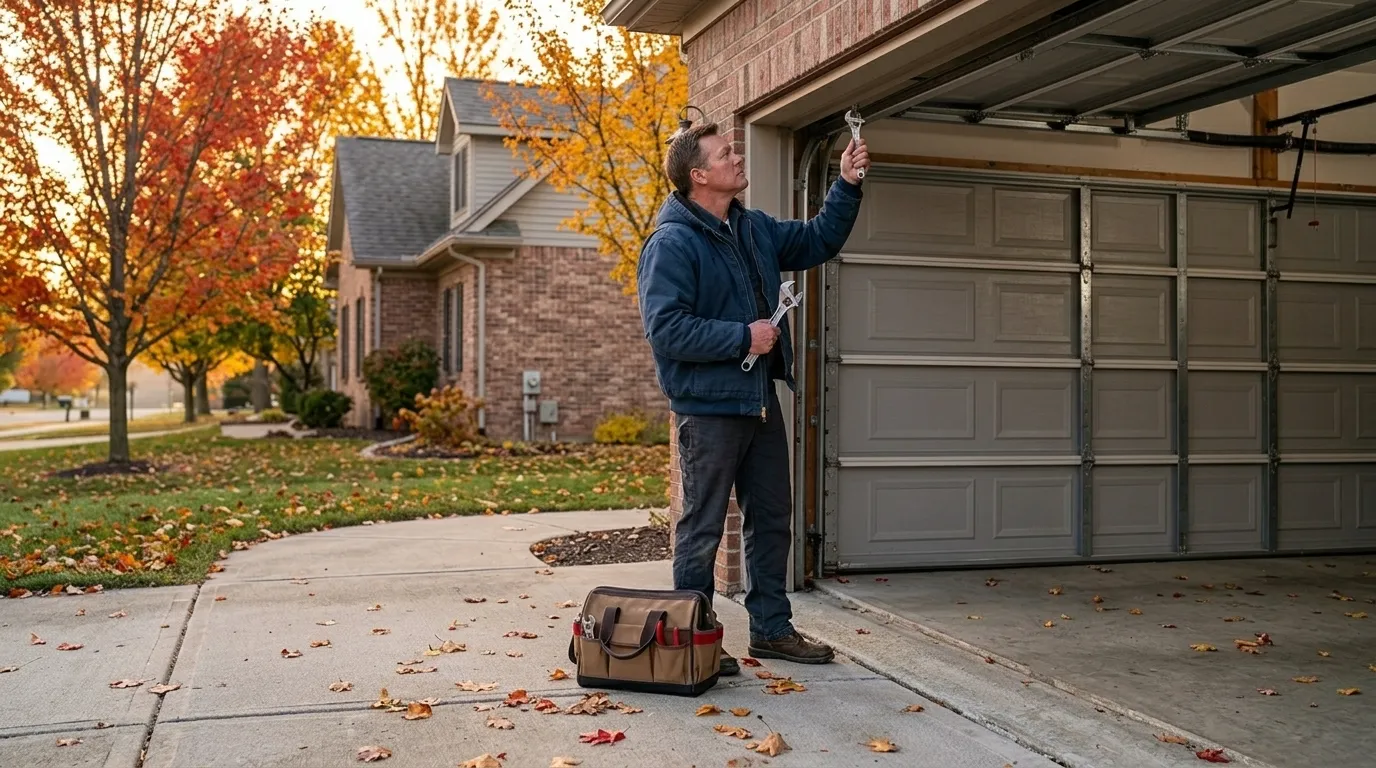
The call usually starts the same way: the door groans, jerks a few inches, then stops, or it slams down the last foot of track instead of settling. Sometimes the opener runs but the door doesn't move at all. On a lot of Pekin jobs the owner tells us the door worked fine last week and now won't budge on a cold morning.
That combination - fine one day, dead the next, worse in the cold - points to a torsion spring that's finally given out after years of cycling, or cable that's jumped a drum because the spring tension dropped. It's rarely the opener itself, even though the opener is what people blame first, since it's the part making the noise.
With 39,143 households across the service area and 27,283 of those owner-occupied houses, we see this pattern often enough that it's the single most common reason for a service call here, not a rare fluke.
Why It Happens Here
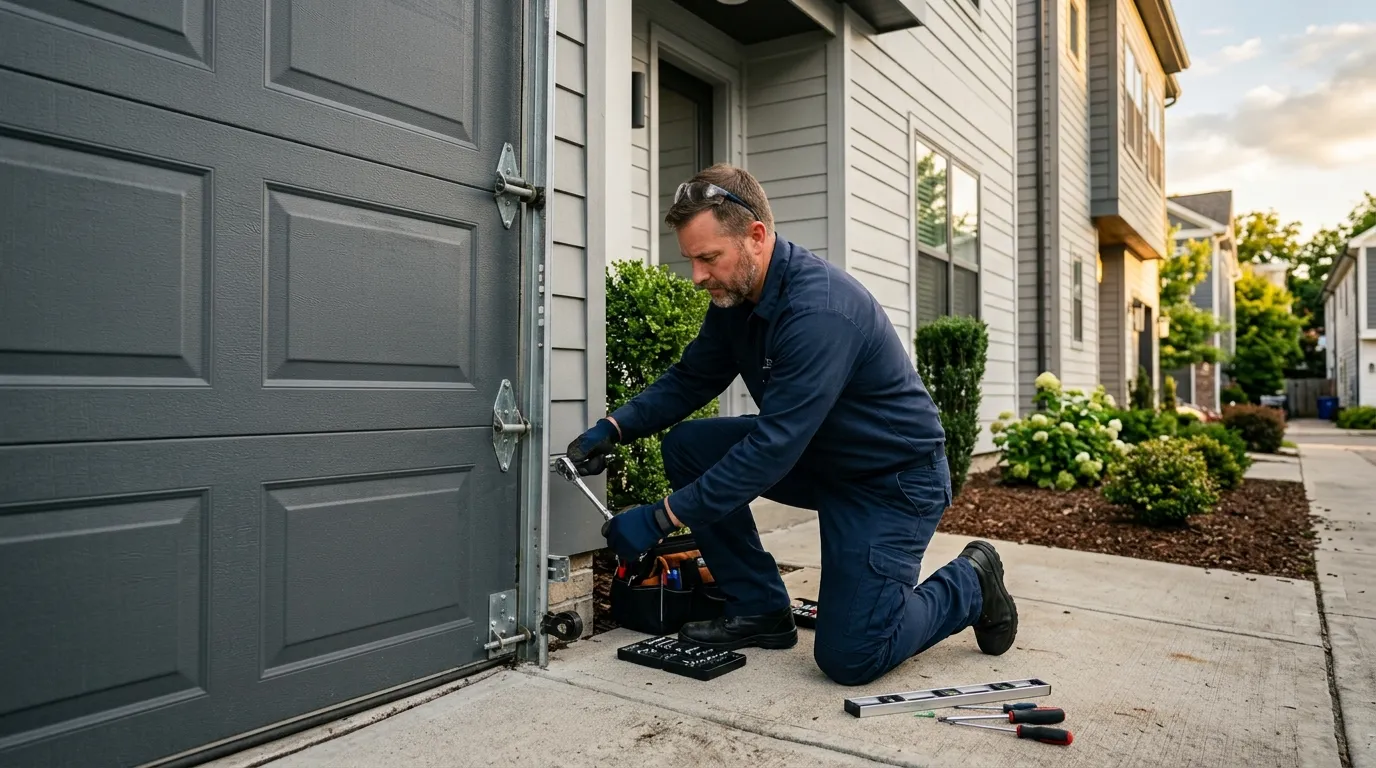
Housing in this area runs from 1938 up through 2002, with a median build year around 1964, and most of the stock clusters in the 1960s and '70s across the 25 named neighborhoods we work in. That matters because a door and spring system installed or replaced during that era is well past any reasonable service life by now, and a lot of these houses still have the original torsion hardware or a direct swap from decades ago that was never upsized for a heavier insulated door.
Add the climate band this part of Illinois sits in - cold, moderate - and you get steel springs that contract in the cold, lose a bit of lift with every freeze-thaw cycle, and finally snap on the coldest stretch of the season rather than in July. A spring rated for a certain number of cycles doesn't care about the calendar, but cold weather does make the failure sharper and more sudden, which is why so many of these calls come in during the first real cold snap rather than gradually.
What the Fix Involves
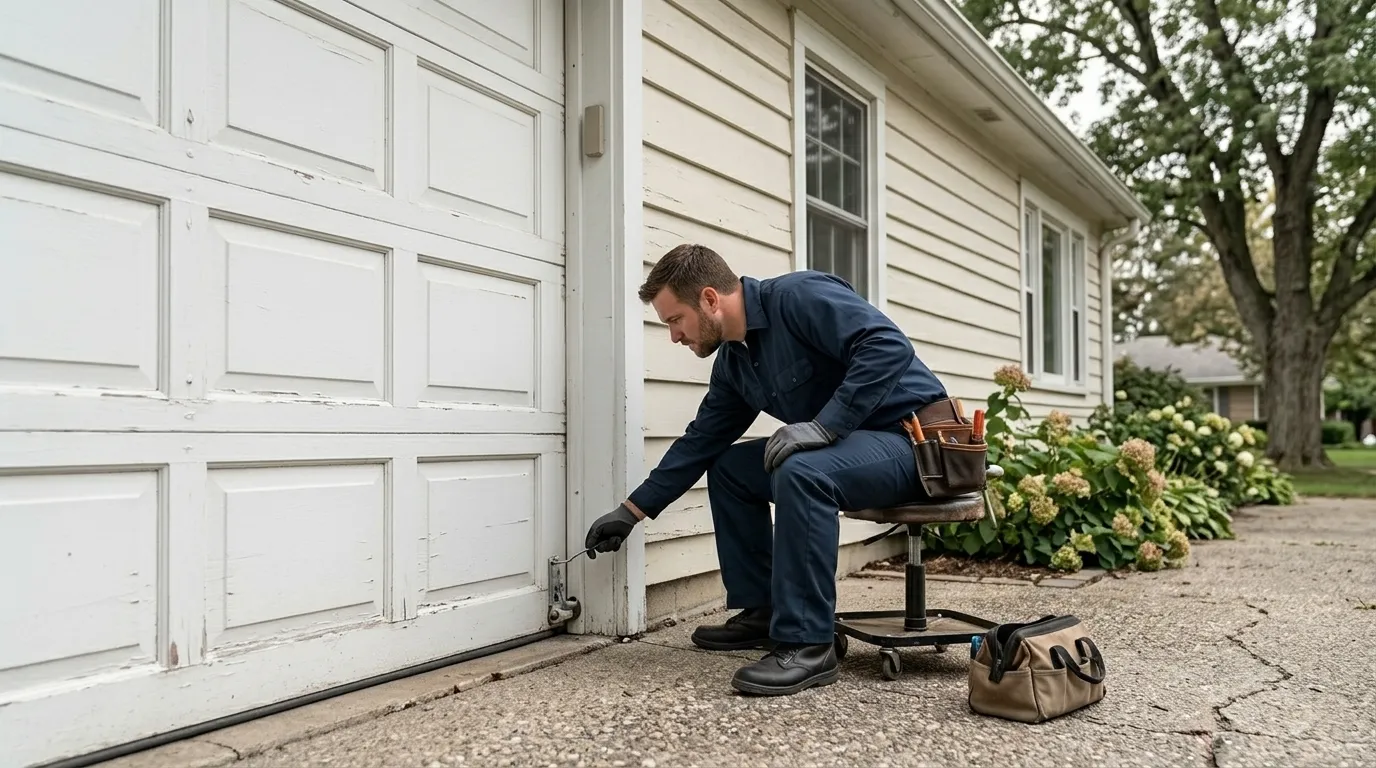
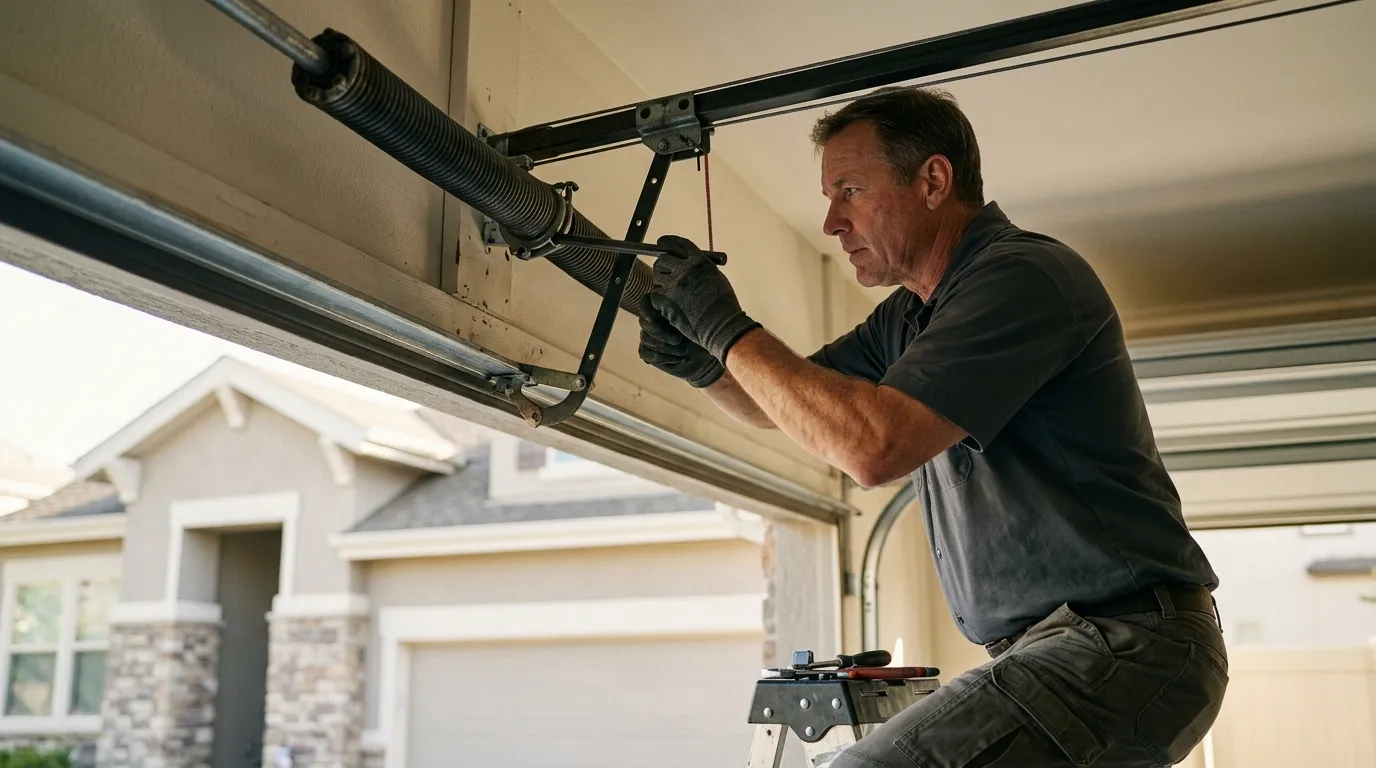
For a broken torsion spring, the job is straightforward: we match the spring to the door's actual weight and the drum size on the shaft, not just swap in whatever's closest, because a mismatched spring is exactly how a 1960s or '70s door ends up back on our schedule in two years. We check the cables, rollers, and hinges at the same time, since a door old enough to need a spring is usually old enough to need a roller or two as well.
If the opener has been straining against a bad spring for weeks, we test it under proper tension before we call the job done - a lot of opener "failures" clear up completely once the spring is doing its job again. On original hardware from a house built before 1970 or so, we also check whether the track and header bracket are still true, since decades of a door dragging on a weak spring can pull things slightly out of square.
The Complications
Here's the honest part: not every door on a house from this era is a straightforward spring swap. Some of the oldest doors in this stock use track and drum sizes that current standard springs don't fit cleanly, and on those we sometimes have to order a spring rather than pull one off the truck, which can mean a short wait instead of a same-day fix. We'll tell you upfront if that's the situation rather than force a part that's close enough.
We also won't sell a full door replacement on a house where the frame and track are sound and a spring and a few hardware parts will do the job right - replacement makes sense when the door itself is failing, not just the spring. With median household income in the area at $69,906, most owners we talk to want the repair that actually fixes the problem without paying for more than that.
Why Pekin Calls Us
What Happens When You Call
Call or Request a Quote
Tell us what the door is doing and roughly how old the house is - that alone points us toward the likely part before a truck leaves.
On-Site Diagnosis
A tech checks the spring, cables, tracks, and opener in person and tells you plainly what is actually wrong.
Straight Price, No Surprises
You get a number before any work starts. It covers parts and labor, nothing added after the fact.
Fixed the Same Visit
Most repairs are done in one trip. If a part needs sourcing, we tell you that upfront instead of guessing.
Talk to a Technician Before You Book
Describe what the door is doing and get a straight answer on what it likely needs.
Jobs Like Yours
Recent work from this service line.

Other Ways We Can Help
Frequently Asked Questions
Why did my garage door spring break in cold weather specifically?
Steel loses some flexibility as it gets cold, and a spring that's already near the end of its cycle life is more likely to snap during a cold snap than in warmer months. It's not that cold weather breaks good springs, it's that it tips over springs already close to failing.
Is my garage door old enough that parts might be hard to find?
Houses in this area were mostly built in the 1960s and '70s, with some going back to 1938. Original track and drum sizes from that era aren't always what current standard springs fit, so on some jobs we do need to order a part rather than have it on the truck.
Should I replace the whole door or just fix the spring?
If the track, frame, and panels are sound, a spring and hardware repair is usually the right call, not a full replacement. We'll tell you plainly if the door itself is what's failing instead of just the spring.
Why did the opener seem to fail instead of the spring?
An opener straining against a broken or weak spring can act like it's dying - stalling, reversing, or running loud - even though the motor is fine. Once the spring is replaced and properly tensioned, most openers go back to working normally.
Need Garage Door Service Built Around Pekin's Older Housing Stock?
Call now for straight answers on cost and timing.