
Pekin Garage Door Guide
What That Noise in Your Garage Door Is Actually Telling You
A guide for Pekin homeowners on garage door noises tied to this area's 1960s-70s housing stock and cold winters, from Pekin Garage Door Pros.
- Licensed & Insured
- Same-Area Service Calls
- Upfront Pricing
Season by Season
Most of the doors we work on in this area went up when the house did, and F1 tells the story: housing here runs 1938 to 2002 with a median build year of 1964. That means a lot of doors and openers installed or replaced sometime in the 1970s through 1990s, on hardware that behaves differently as the seasons turn.
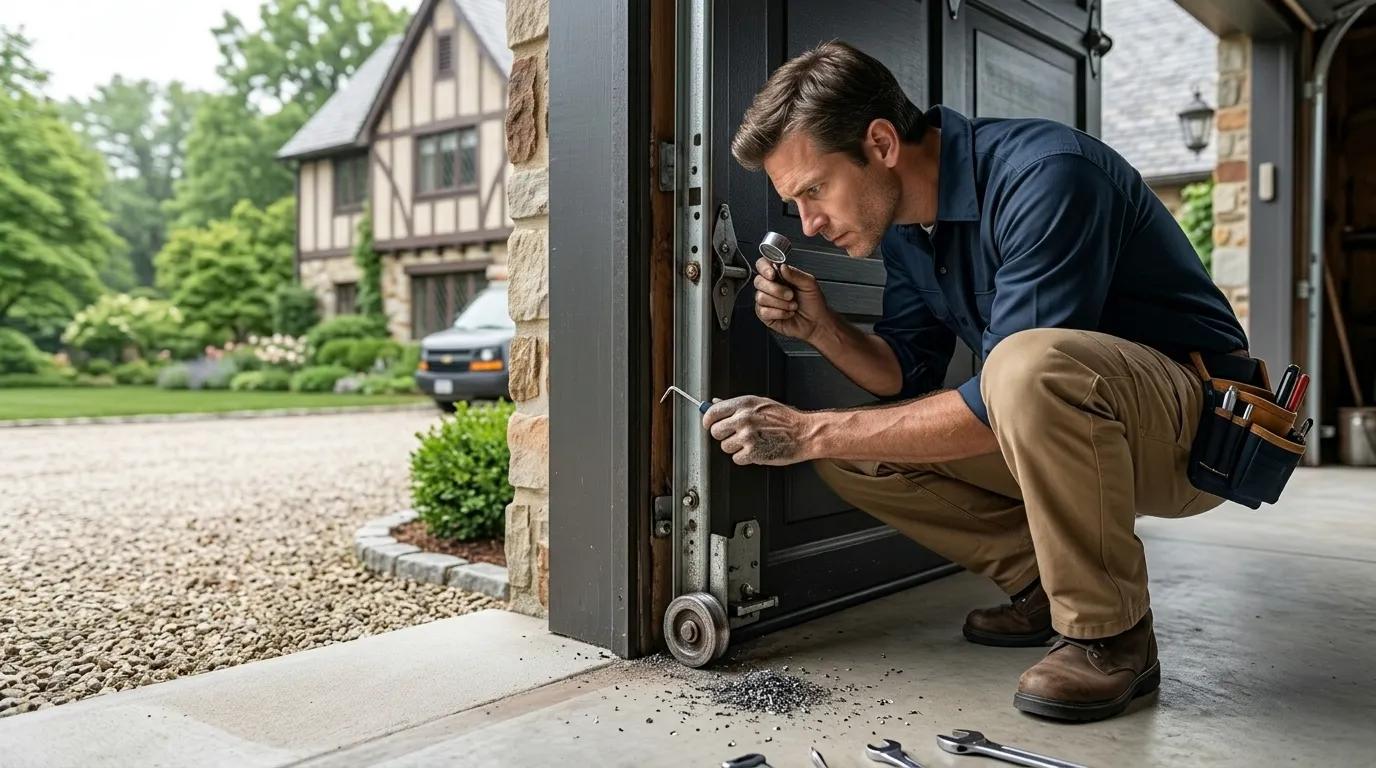
In a cold-moderate climate band like this one, the first hard freeze is when a quiet door starts talking. Steel contracts, old grease on the rollers stiffens up, and a track that was a hair out of alignment in October becomes a grinding one in January. Spring and fall are when you hear the softer stuff - a rhythmic squeak from a roller that's due, a light rattle from a hinge screw working loose after a summer of expansion and contraction.
Summer heat does its own damage quietly. Nylon rollers on older openers can get brittle rather than loud, so the noise you don't hear in July shows up as a bang in December when the door finally lets go.
None of this is dramatic. It's just what happens to hardware that's lived through 40 to 80 winters on a house built before anyone worried about insulated steel doors.
The Situation
Across the towns we cover - North Pekin, Mapleton, South Pekin, Bartonville, Creve Coeur and the rest of the 25 named areas in F2 - the housing stock skews the same way: mostly 1960s and 70s construction. That's a specific kind of garage. Single-car and two-car openings, often with the original torsion or extension spring setup, sometimes upgraded once, sometimes never.
With 27,283 owner-occupied houses across the service area and a median household income of $69,906, most people here aren't replacing a door on a whim. They want to know if the noise means "grease it" or "replace it," and that decision usually comes down to the age of the spring and how the door has been maintained since whoever owned the house before you last touched it.
A loud bang on a cold morning is almost always a spring. A grinding sound when the door is mid-travel is usually a roller or a track that's shifted.
A rhythmic clunk once per rotation points to the opener's drive gear or a worn coupling. None of these get better on their own, and in this climate they tend to get worse fast once the temperature drops.
Where People Go Wrong
The most common mistake we see on doors from this era is treating a noise as a lubrication problem when it's actually a tension problem. Spraying WD-40 on a torsion spring that's lost tension from decades of cold-weather cycling quiets it down for a week and then it's back, usually worse.
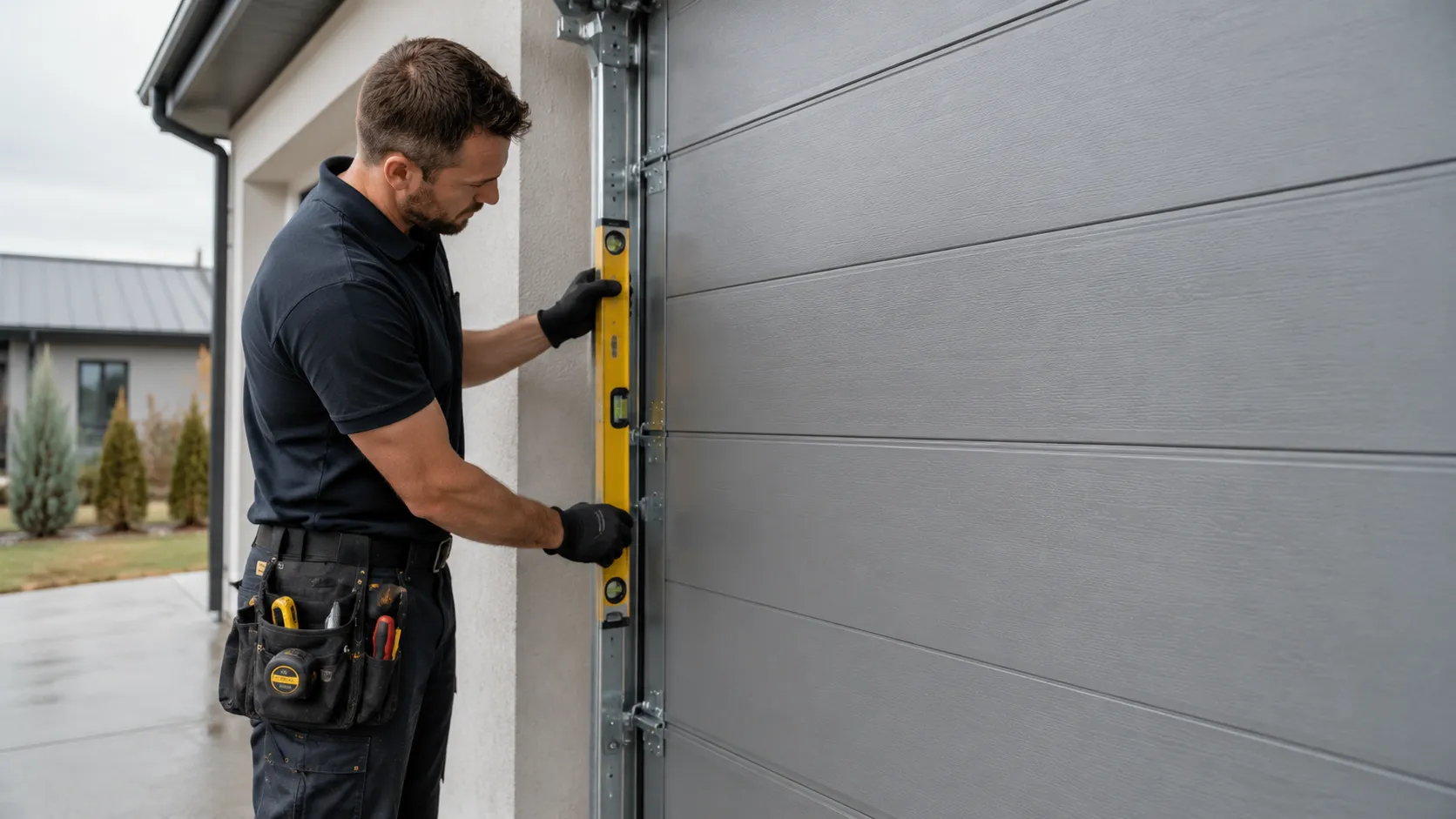
The second mistake is ignoring the track alignment on houses built before the 1980s, where the framing has settled a little over 40 to 80 years. A track that's a quarter-inch out doesn't sound alarming until winter, when a stiff cold door pushes harder against a misaligned roller and the noise turns into a jam.
Here's the honest limitation: we don't recommend replacing a spring set that's still within its working life just because it makes noise once in freezing weather. Sometimes it's just cold steel doing what cold steel does, and a full spring replacement on a working system is money better spent elsewhere.
The call is whether the noise is seasonal and consistent, or getting louder and more frequent. That difference matters more than the noise itself.
What Local Conditions Do
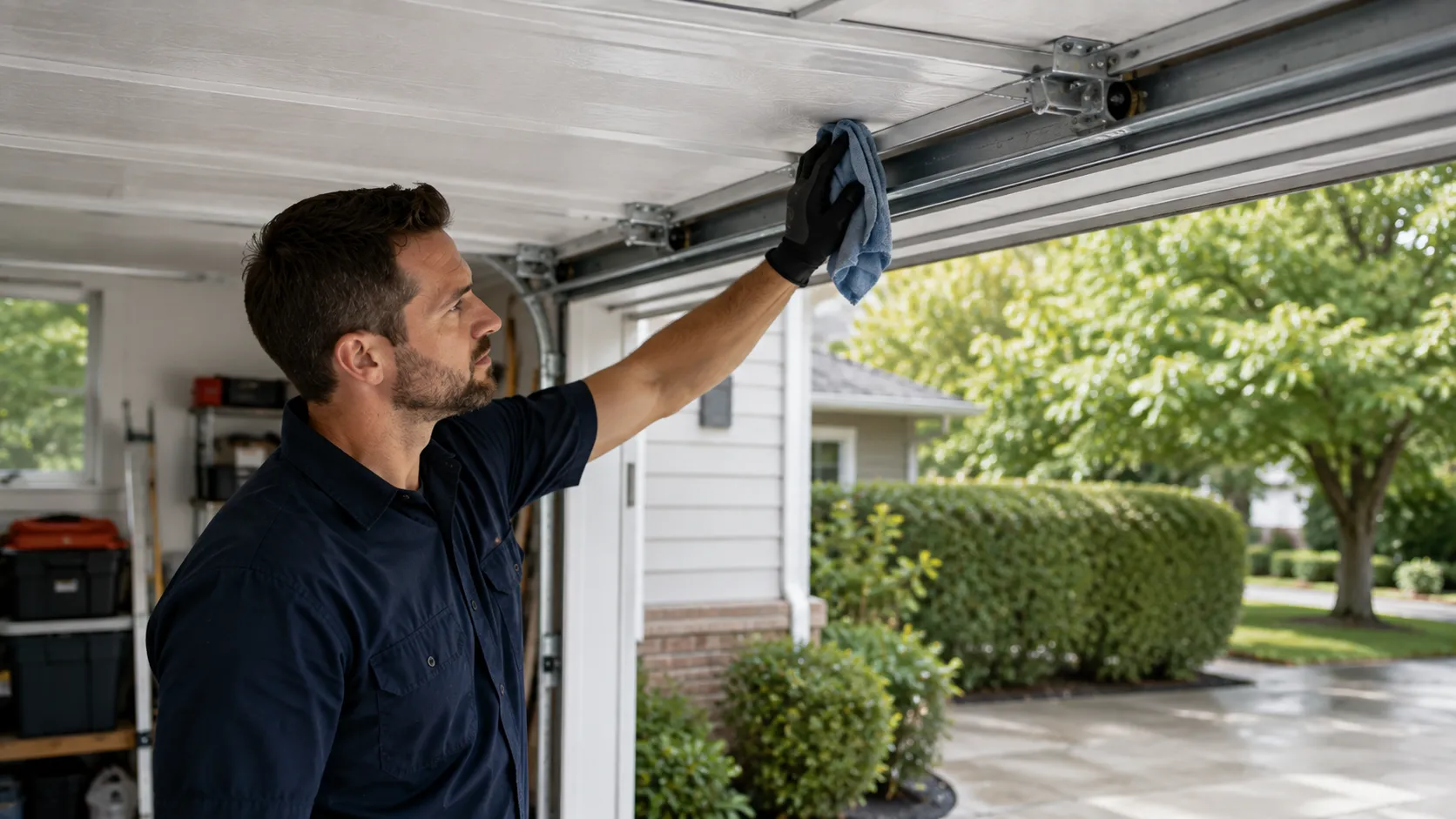
A cold-moderate climate means this area gets real freeze cycles most winters without the extreme swings of a harsher zone. That's actually harder on old hardware than one brutal cold snap - it's the repeated contraction and expansion, year after year since the 1960s and 70s, that fatigues springs and loosens fasteners.
On a house from the median build year of 1964, that's roughly six decades of seasonal cycling on hardware that was likely replaced once, if at all. The noise you hear now is often the sound of a spring or roller reaching the end of a service life that started before most current homeowners bought the place.
We don't guess at this over the phone. A noise that sounds minor on a call can be a spring about to let go, and one that sounds alarming can be a $10 fix. If you're in Pekin or one of the nearby communities we cover, the fastest way to know which one you've got is to have someone look at the door directly.
How We Can Help
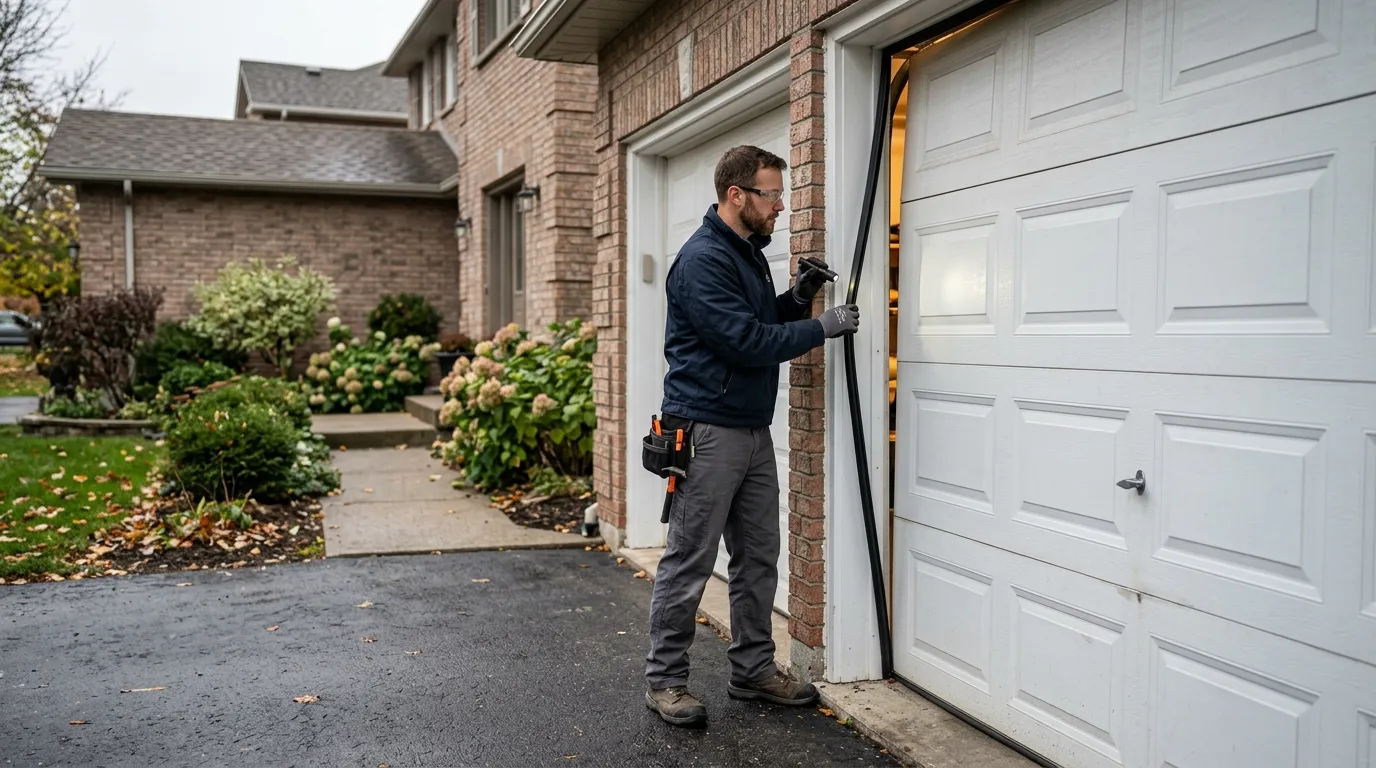
Garage Door Repair
Springs, cables, tracks, rollers, and openers fixed by a tech who explains the problem before touching anything.
Learn more →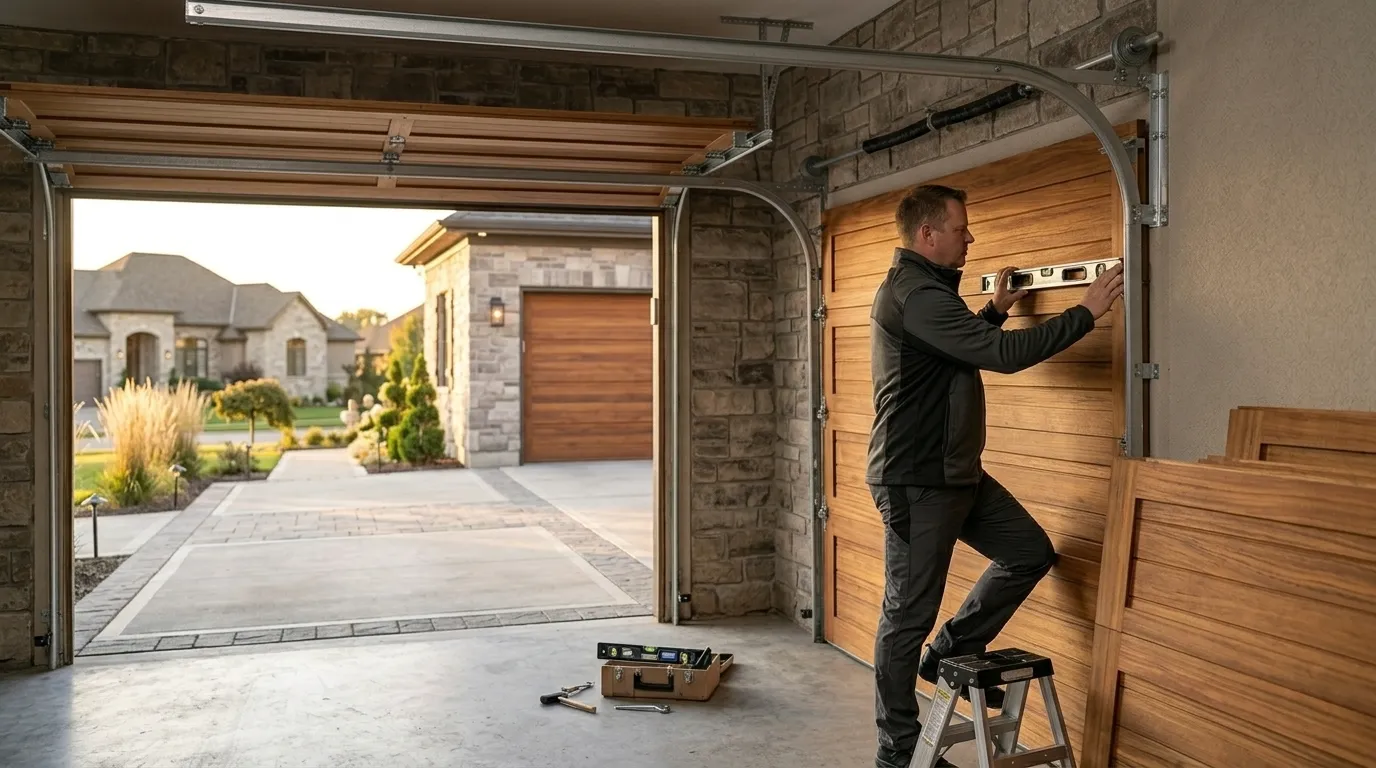
Garage Door Installation
New sectional doors sized and installed for the housing stock actually built in this area.
Learn more →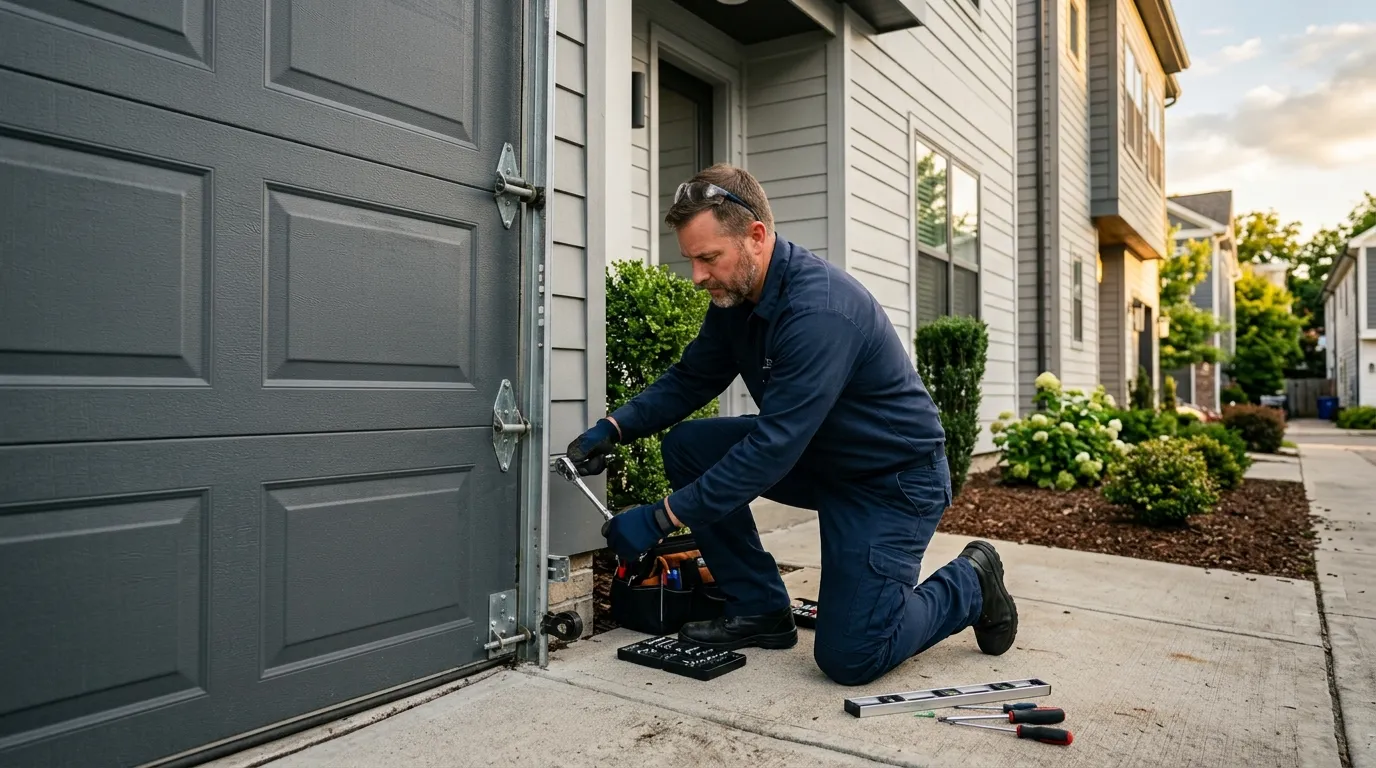
Garage Door Service
Tune-ups, lubrication, and safety checks that catch a small problem before it becomes a service call.
Learn more →Frequently Asked Questions
Why does my garage door only make noise in the winter?
Steel hardware contracts in the cold, old grease stiffens, and any slack in the track or rollers becomes more noticeable when the door is harder to move. In this area's cold-moderate climate, a door that's silent in August often starts squeaking or grinding once temperatures drop, especially on houses built before the 1980s.
Is a loud bang from my garage door always the spring?
Not always, but on houses from this area's typical 1960s-70s build era, a sudden bang - especially on a cold morning - is most often a torsion or extension spring reaching the end of its life. It's worth having it checked before using the door again, since a broken spring under tension is a safety risk.
My door is 50-plus years old and still works. Should I replace it anyway?
Not automatically. If the door and hardware are cycling smoothly and the noises are mild and seasonal, replacement isn't always the right call. We look at spring tension, roller wear, and track alignment before recommending anything - sometimes a tune-up handles it.
Have a Door That Needs a Second Opinion?
Call and describe what it is doing - we will tell you what it likely is.