Pekin Garage Door Guide
Why Pekin's Older Garage Doors Struggle in Winter
Most homes in Pekin went up between the 1960s and 1970s, so garage doors here face original hardware, cold winters, and springs nearing the end of their life.
- Licensed & Insured
- Same-Area Service Calls
- Upfront Pricing
Season by Season
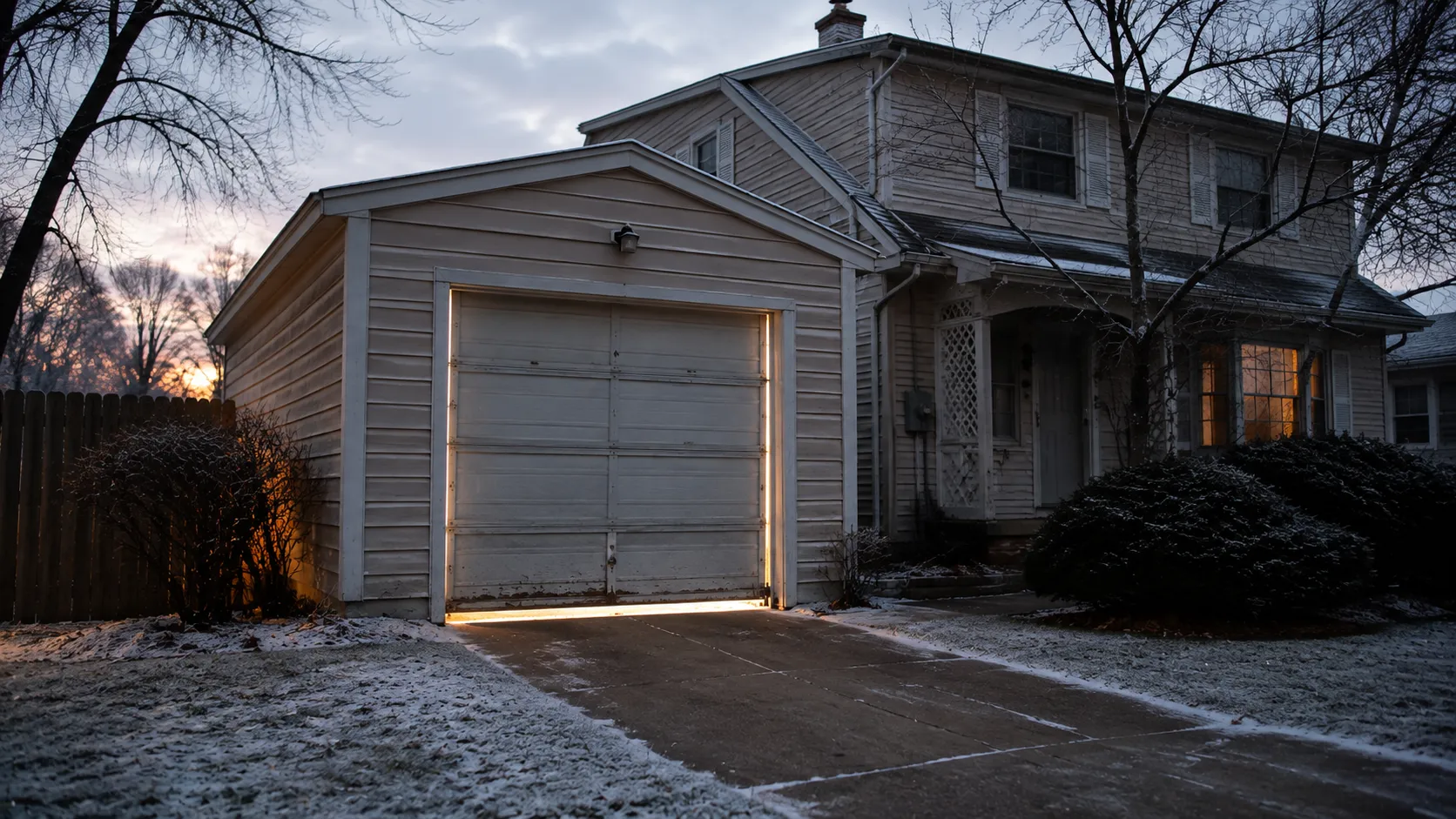
Pekin sits in a cold-moderate climate band, and that swing between hard freezes and spring thaw is what wears a garage door down faster than age alone would. Steel panels contract in the cold and expand again once temperatures climb, and torsion springs lose a measurable amount of tension when the metal is cold - a spring that lifts a door easily in July can feel noticeably heavier in January. Tracks that were bolted true in 1965 shift slightly as houses settle, and cold makes any existing misalignment worse because the rollers have less give.
Fall is when we see people notice a door that suddenly sounds rough or binds partway up - it's usually not a new problem, just an old one made obvious by the first cold snap. Spring brings the opposite complaint: doors that seemed fine all winter start sagging or drifting off-track once things warm and settle again. None of this is really about the season causing damage in a single event.
It's cumulative - decades of the same freeze-thaw cycle acting on hardware that was never built with this climate's swings in mind, because building practice back then didn't plan for it the way current code does.
The Situation
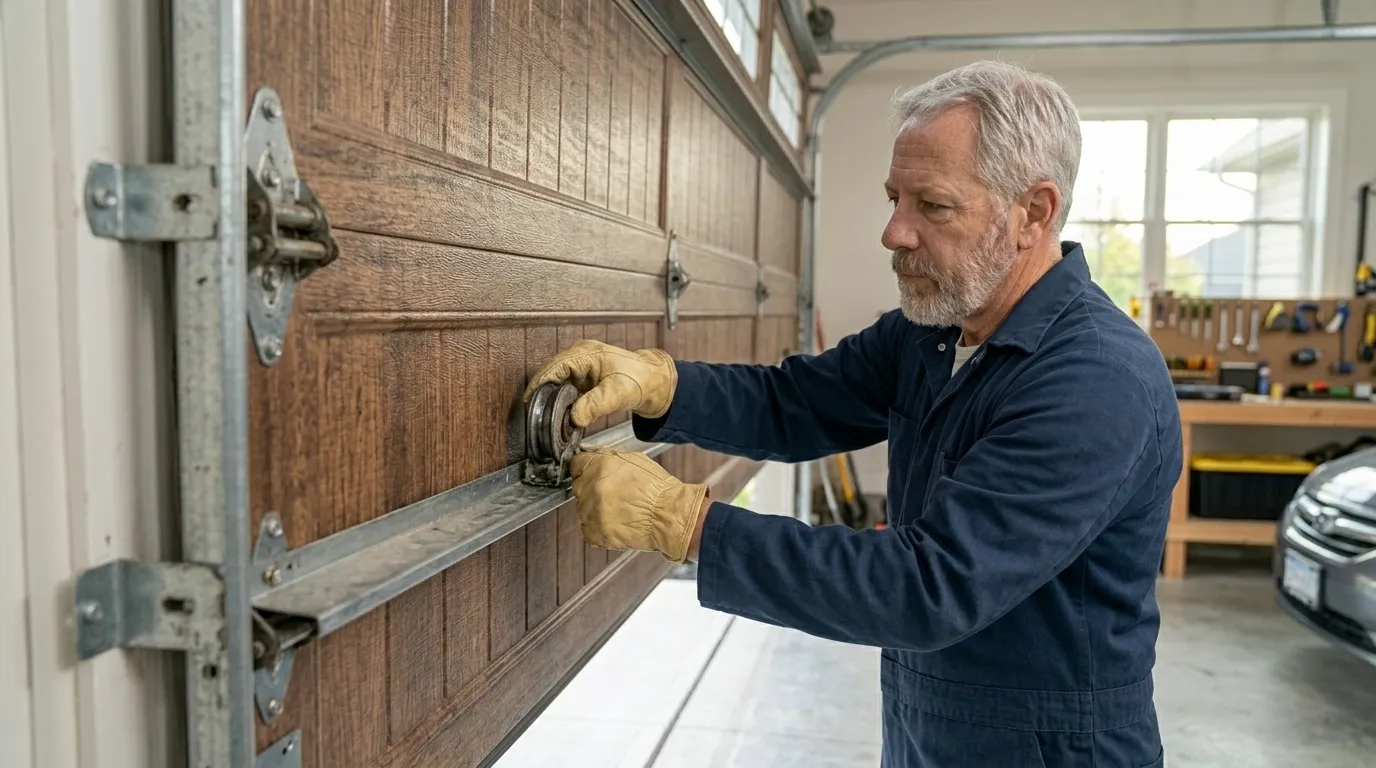
Housing in the Pekin service area was mostly built between 1938 and 2002, with the median landing around 1964, and that stock - mostly 1960s and 70s construction - repeats across all 25 named areas we work in, not just one neighborhood. That matters more than it sounds like it should. A door and opener installed when a house was built in 1964 is now well past any reasonable service life, and a lot of these doors were never replaced, just patched: a new opener bolted to old track, a new panel swapped in without checking the spring size.
Across the wider area there are 39,143 households and 27,283 owner-occupied houses, which gives you a sense of how much of this original-era hardware is still out there doing daily work. We're not guessing that your door is old - the housing data says it probably is, unless your house is one of the newer builds toward the top of that 1938-2002 range. If you want to see what we do about it, start here.
Where People Go Wrong
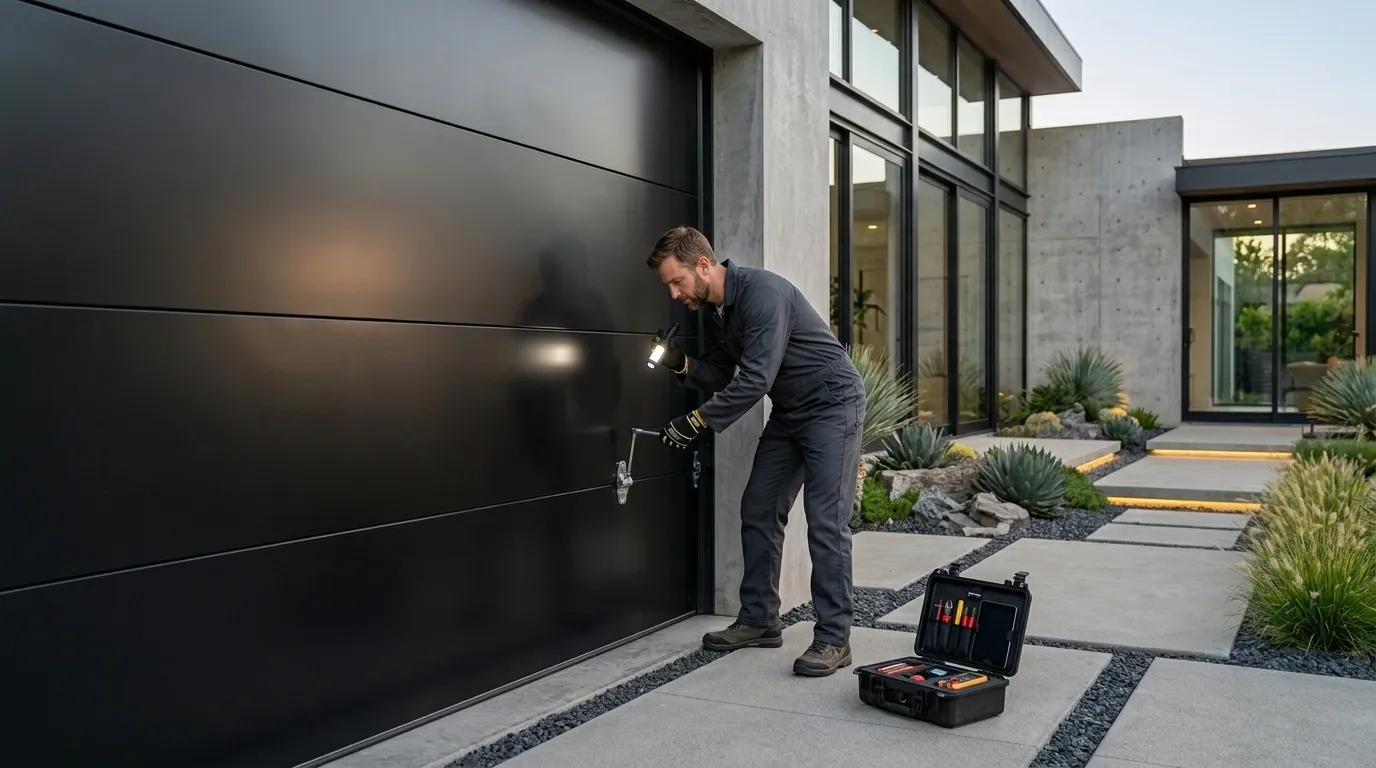
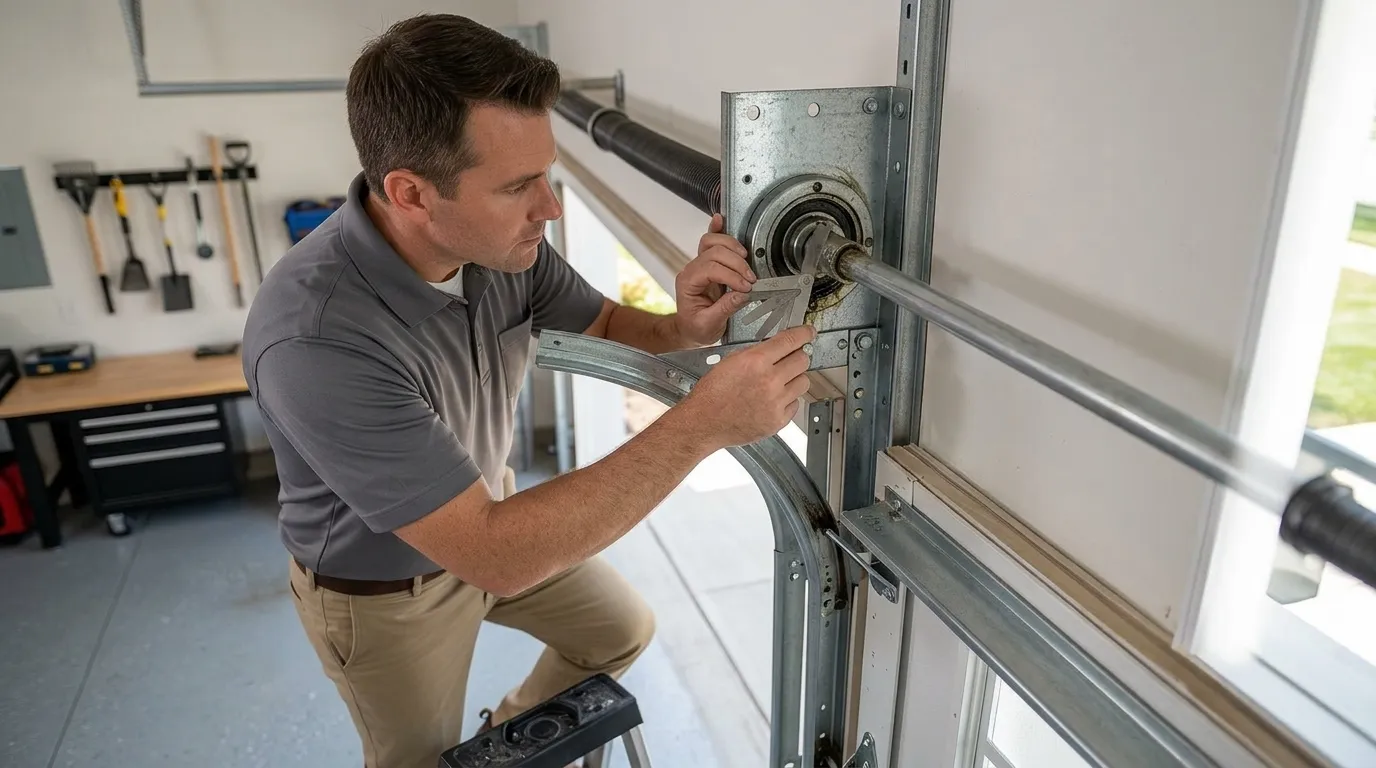
The most common mistake we see on houses from this era is treating a stiff or noisy door as a lubrication problem when it's actually a tension problem. WD-40 on a torsion spring that's lost strength from age and cold doesn't restore lift - it just quiets the symptom for a week. The second mistake is DIY spring adjustment on hardware from the 1960s and 70s, where the spring size and drum setup don't always match what's sold today; guessing wrong here isn't a minor error, it's how people get hurt.
Third, a lot of owners assume a door that still opens and closes is fine, without checking whether the door itself is insulated. Doors built before insulation rules were standard were made as single steel skin with no thermal break, and in a cold-moderate climate that shows up as a garage that never warms past outdoor temperature, which then affects anything mounted on the shared wall. We'll say plainly: we don't try to source obsolete parts for every opener model from that era - sometimes the honest answer is that replacement is faster and cheaper than waiting on a part nobody stocks.
What Local Conditions Do
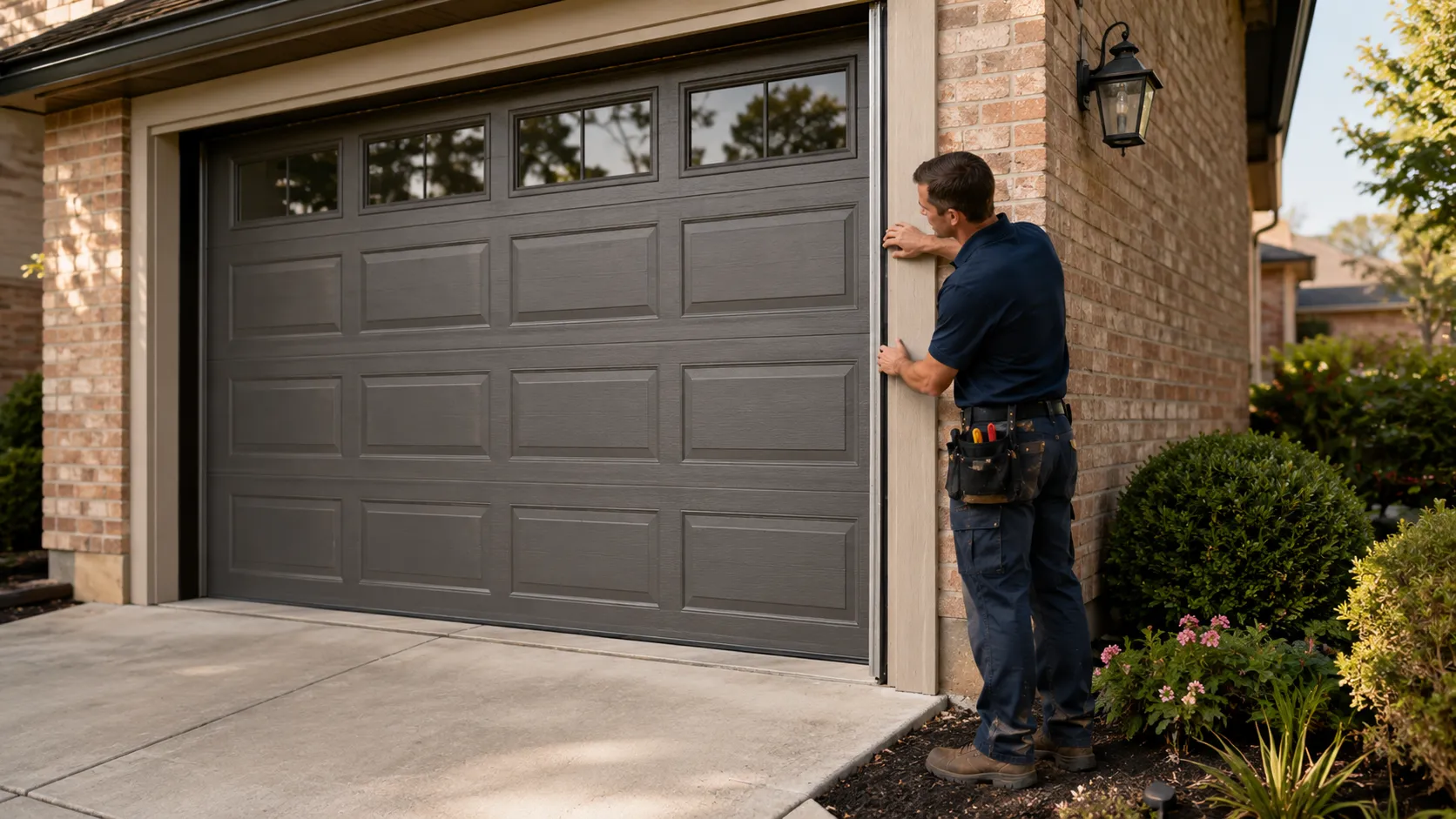
Put the housing age and the climate together and you get a specific, repeatable failure pattern rather than a vague one. A torsion spring wound for a door built in the 1960s was sized for that door's weight and for expected years of service, not for sixty-plus years of seasonal cold and heat cycling - it's not surprising when one lets go on a January morning rather than a mild afternoon. Steel panels from that era, uninsulated and single-layer, contract more in the cold than a modern insulated door does, which is why gaps at the bottom seal and along the sides tend to open up wider in winter on older Pekin houses than on newer construction.
Track alignment issues compound the same way: a house settling since the 1960s or 70s has already shifted the frame slightly, and cold-stiffened rollers have less tolerance for that shift. None of this means every old door is a lost cause - plenty of this hardware can be serviced and kept going. But it does mean a Pekin homeowner troubleshooting a stuck or noisy door should think about age and cold together, not either one alone.
How We Can Help
Garage Door Repair
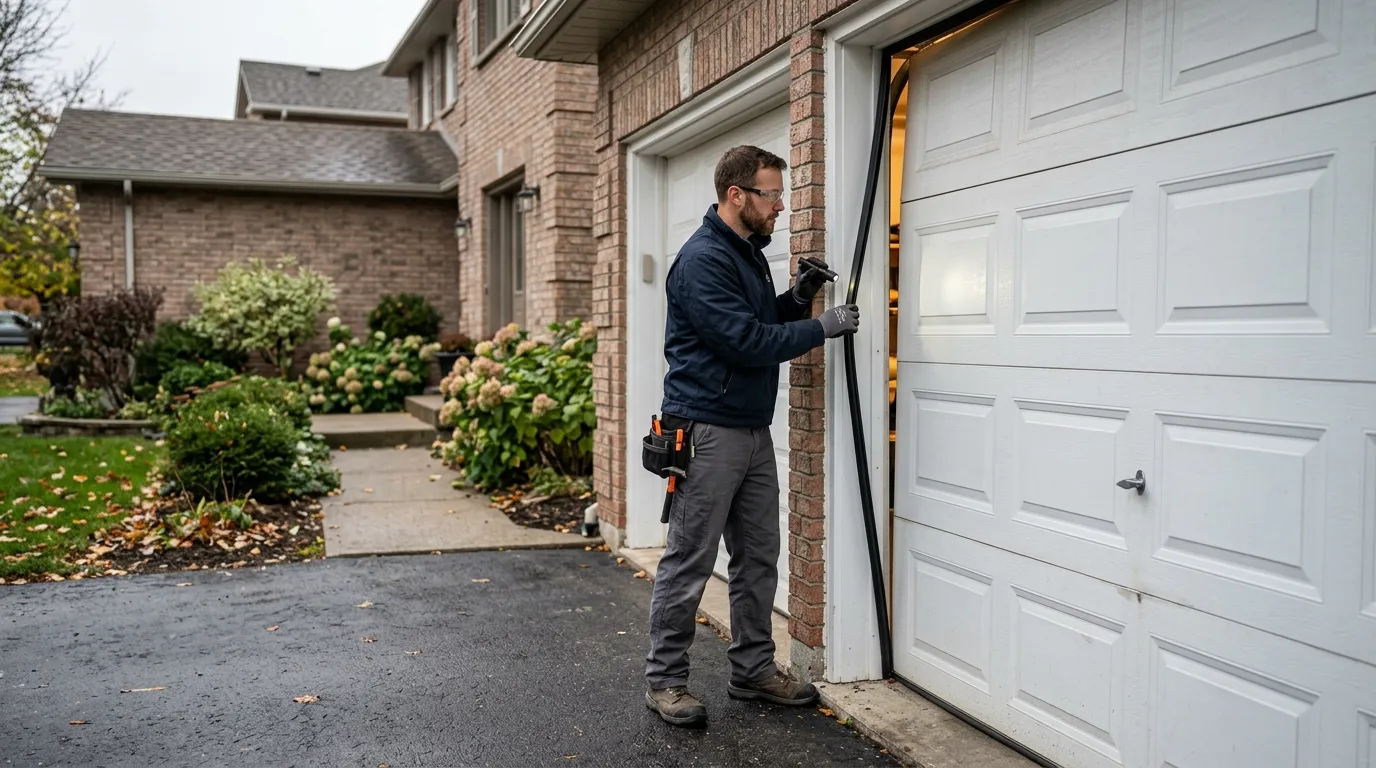
Springs, cables, tracks, rollers, and openers fixed by a tech who explains the problem before touching anything.
Learn more →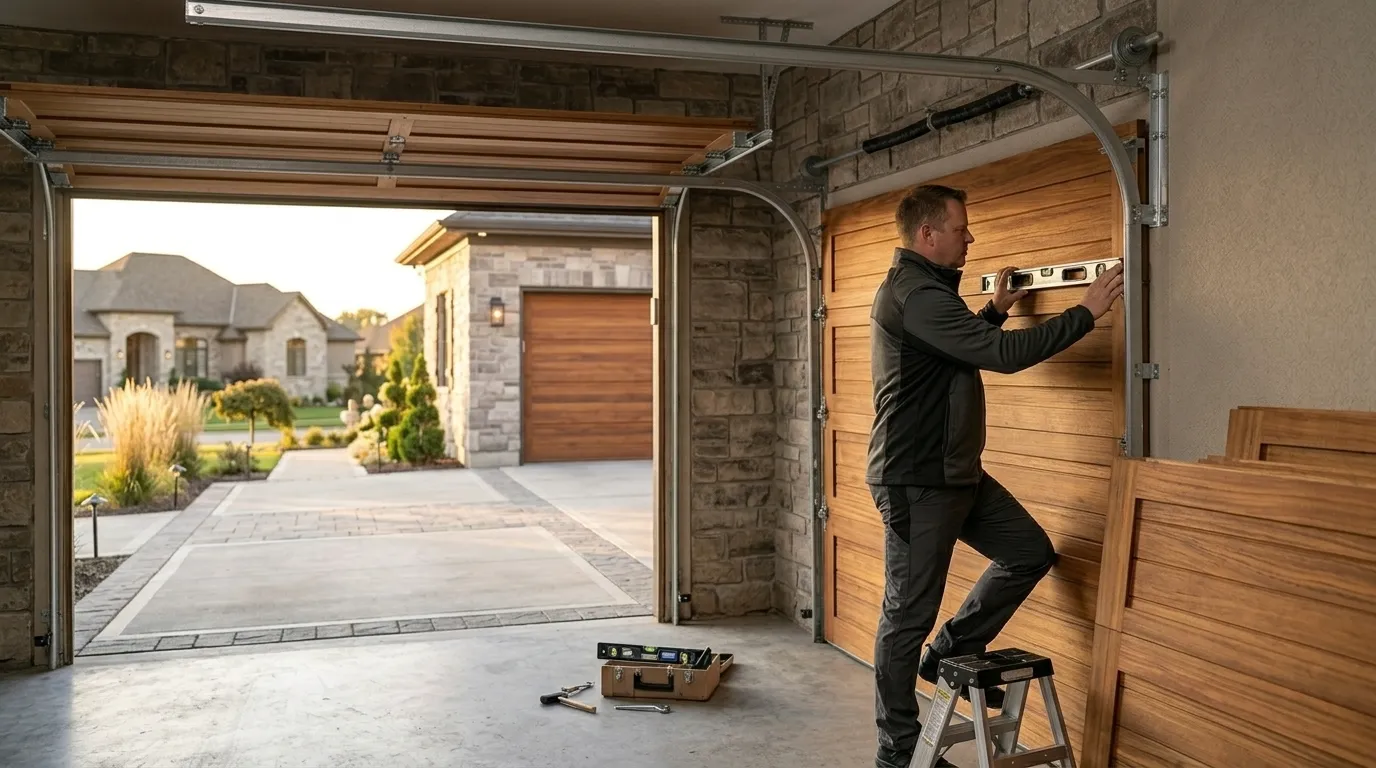
Garage Door Installation
New sectional doors sized and installed for the housing stock actually built in this area.
Learn more →
Garage Door Service
Tune-ups, lubrication, and safety checks that catch a small problem before it becomes a service call.
Learn more →Frequently Asked Questions
Why does my garage door get harder to lift every winter?
Torsion springs lose tension when they're cold, and in Pekin's cold-moderate climate that's a real seasonal swing, not just in your head. If your door is original to a house built in the 1960s or 70s, the spring is also just old, so cold weather is exposing wear that was already there rather than causing something new.
Is it worth repairing a door from the 1960s or should I replace it?
It depends on what's actually failing. A worn spring or cable is usually a straightforward repair. But if the panel is uninsulated steel from before insulation rules were common, or the opener is an obsolete model we can't get parts for quickly, replacement is often the more sensible call, especially given how many houses in this area are the same age.
Do you carry parts for older opener models?
Not always, and we won't pretend otherwise. Some hardware from houses built decades ago uses parts that are no longer made or take time to source. We'll tell you upfront if that's the situation with your door instead of stringing out a repair.
Have a Door That Needs a Second Opinion?
Call and describe what it is doing - we will tell you what it likely is.