
Garage Door Repair in North Pekin
Garage Door Repair for North Pekin's 1960s Housing Stock
North Pekin homes date to a 1965 median build year, meaning original torsion hardware on many houses. We repair from Pekin, 3 miles out, for this area's older doors.
- Licensed & Insured
- Same-Area Service Calls
- Upfront Pricing
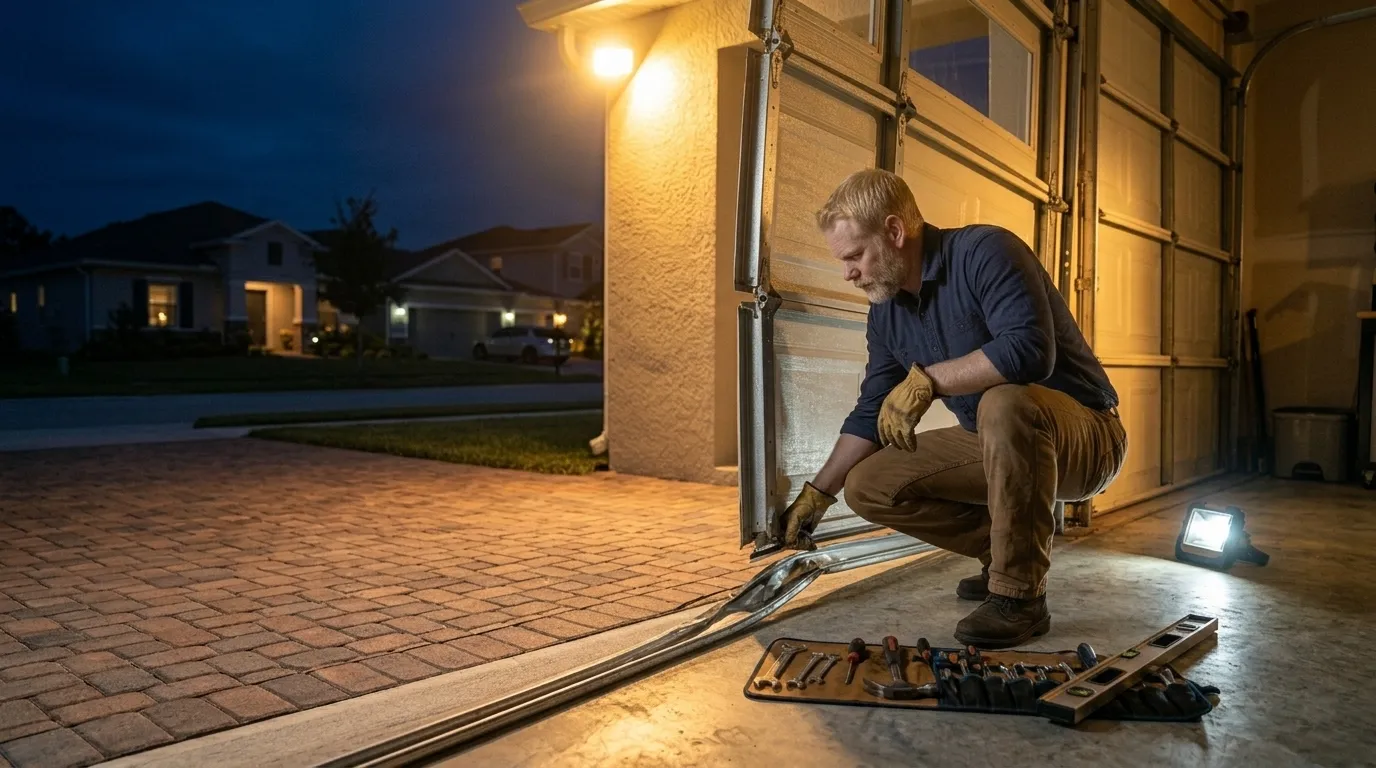
What Happens When You Call
-
1
Call or Request a Quote
Tell us what the door is doing and roughly how old the house is - that alone points us toward the likely part before a truck leaves.
-
2
On-Site Diagnosis
A tech checks the spring, cables, tracks, and opener in person and tells you plainly what is actually wrong.
-
3
Straight Price, No Surprises
You get a number before any work starts. It covers parts and labor, nothing added after the fact.
-
4
Fixed the Same Visit
Most repairs are done in one trip. If a part needs sourcing, we tell you that upfront instead of guessing.
The Symptom
Most houses in North Pekin went up around 1965, and a lot of that original garage door hardware has never been swapped out. If your door groans, drops unevenly, or the opener strains before the door even lifts, there's a good chance you're running on a spring or a track that's older than the roof over it. That's not a guess about your specific door - it's what the build year tells us about the odds.
A door installed when the house was framed, on the original torsion spring and steel track, is going to show its age with slow starts, a cable that's frayed thin, or a bottom bracket that's worked loose from decades of expansion and contraction. The symptom you notice first - noise, sag, a remote that used to work and doesn't - usually traces back to a part nobody's touched since the house was new. We come from Pekin, about 3 miles away, and the pattern we see on these calls tracks with how old this pocket of housing actually is.
It's worth knowing what you're dealing with before you call, because a 1960s door and a 2005 door fail in different ways and get fixed differently too.
What the Fix Involves
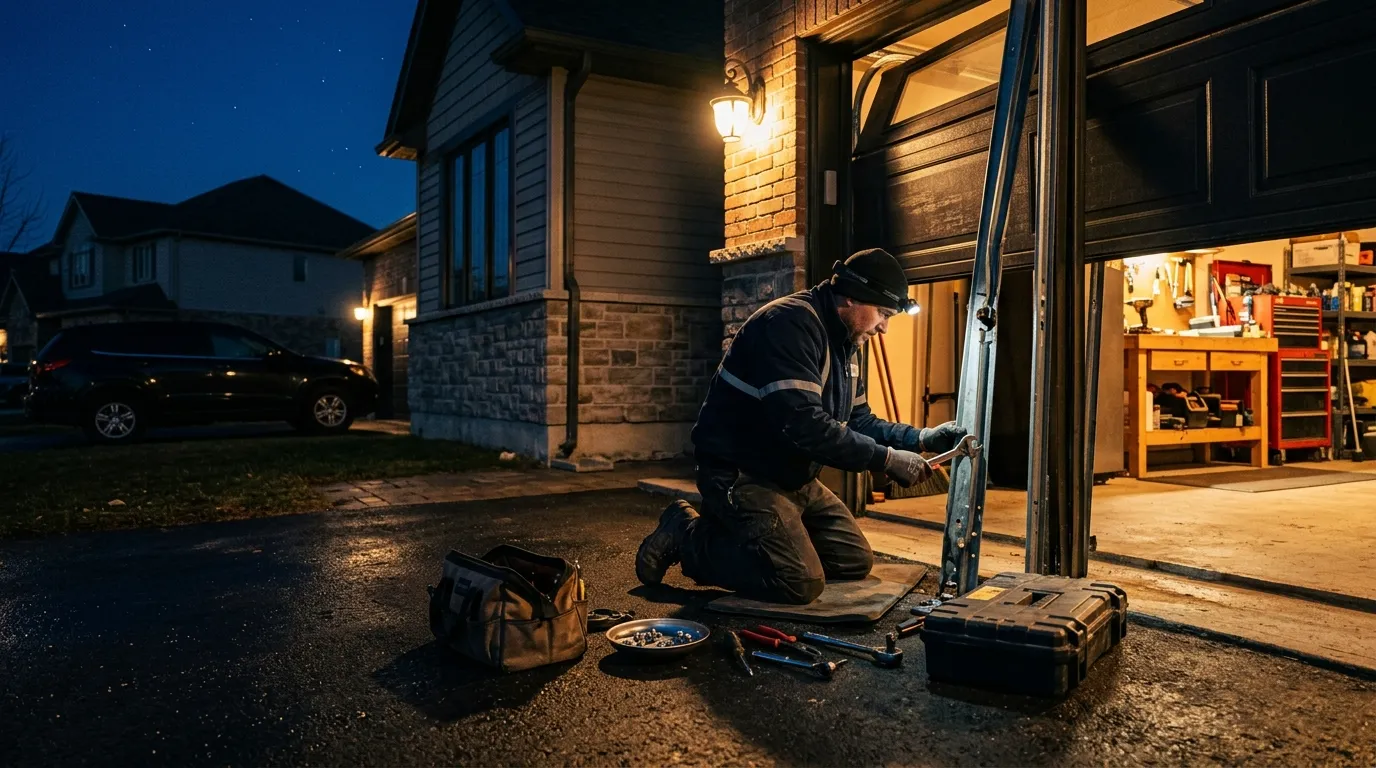
On a door this age, the fix usually starts with the spring, not the opener. Torsion springs from the original build cycle are wound for a door weight and wire gauge that isn't always what's on the shelf today, so matching it matters more than swapping it fast. We check the drums, the cable ends, and the bottom brackets while we're in there, because on original hardware one worn part is rarely alone - if the spring's original, the rollers usually are too.
Track alignment gets checked next; steel track from this era has often been re-shimmed once or twice by whoever owned the house before, and that patchwork shows up as binding or a door that walks sideways in the opening. If the opener's newer than the door - which is common, since openers get replaced more often than the hardware they're bolted to - we make sure the two are actually talking to each other correctly, not just running. The honest limitation here: if the door itself has bowed, or the track is rusted through rather than just misaligned, replacement parts for that era aren't always sitting on a shelf, and we'll tell you straight if repair isn't the better spend of your money.
The DIY Question
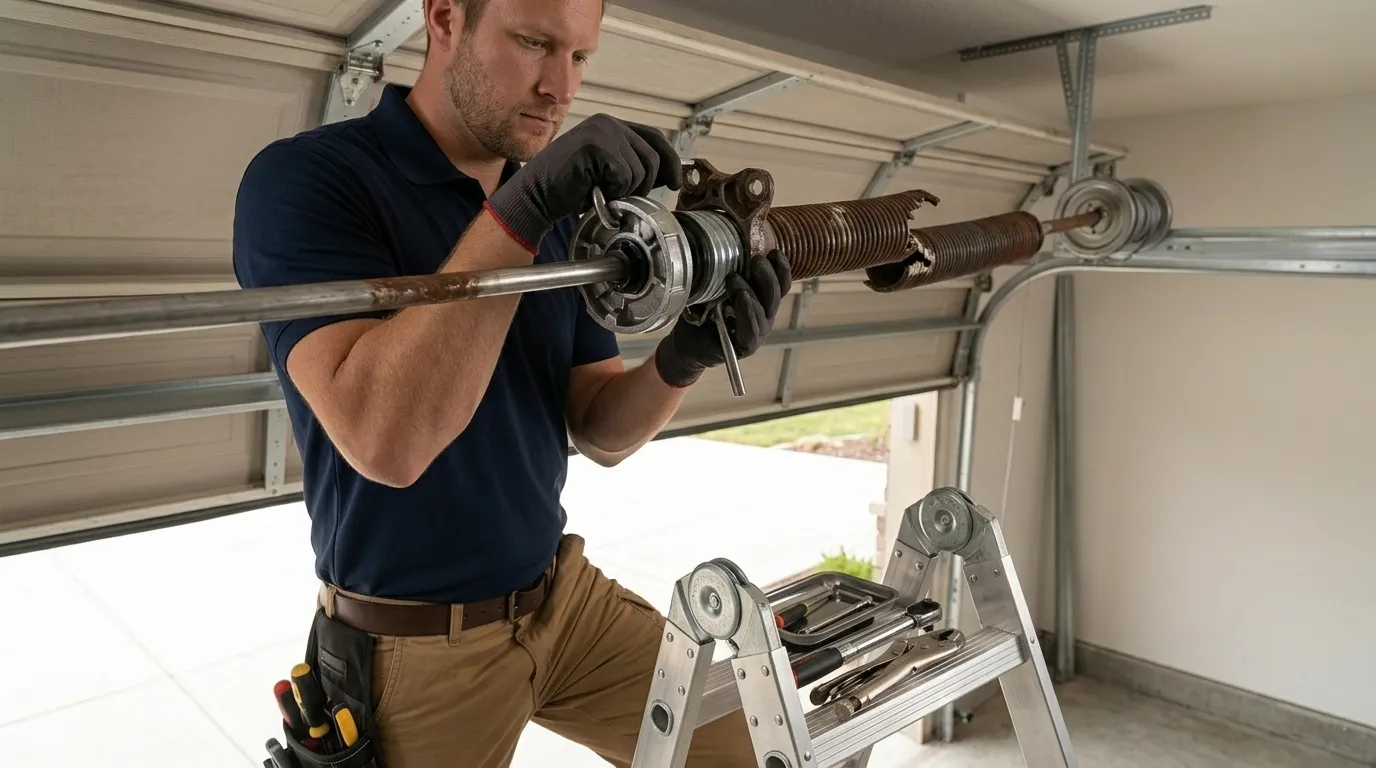
A homeowner can tighten a loose bracket bolt or lubricate a dry roller, and that's fine - do it. What you shouldn't touch is anything holding tension: the torsion spring, the cable under load, or the drum it winds onto. On a door this old, that hardware has had close to sixty years to fatigue in ways you can't see from the garage floor, and a spring that lets go under load can break bones.
It's not a skill problem, it's a physics problem - the stored energy in a wound spring doesn't care how careful you are. If your door is one of the many in North Pekin still running original torsion hardware, treat the spring and cable as off-limits and call for that part specifically, even if you're comfortable with tools. Where DIY genuinely helps is diagnosis: note whether the door struggles going up or coming down, whether it's noisy on one side more than the other, and whether the opener strains before or after the door starts moving.
That narrows the job before we even get the truck out from Pekin.
The Complications
The complication on original hardware isn't usually the part that's broken - it's the part that breaks next because it was never the problem to begin with. A worn cable pulls harder on a drum that's already pitted from decades of use; a bottom bracket that's been loose for years can bend the track slightly, so a spring replacement alone doesn't fix the noise. On houses built in the 1960s and 70s pattern common across this area, we also see doors where a previous owner replaced the opener but left the door hardware untouched, so the opener is fighting a door that doesn't move as freely as it should.
Cold matters too - this area sits in a moderate-cold climate band, and steel torsion springs lose a little flex in a hard winter, which is often when a marginal spring finally gives out. None of this means every call turns into a bigger job. It means we look at the whole system once, not just the part you called about, so you're not paying for a second visit six months later on the part next to it.
Why It Happens Here
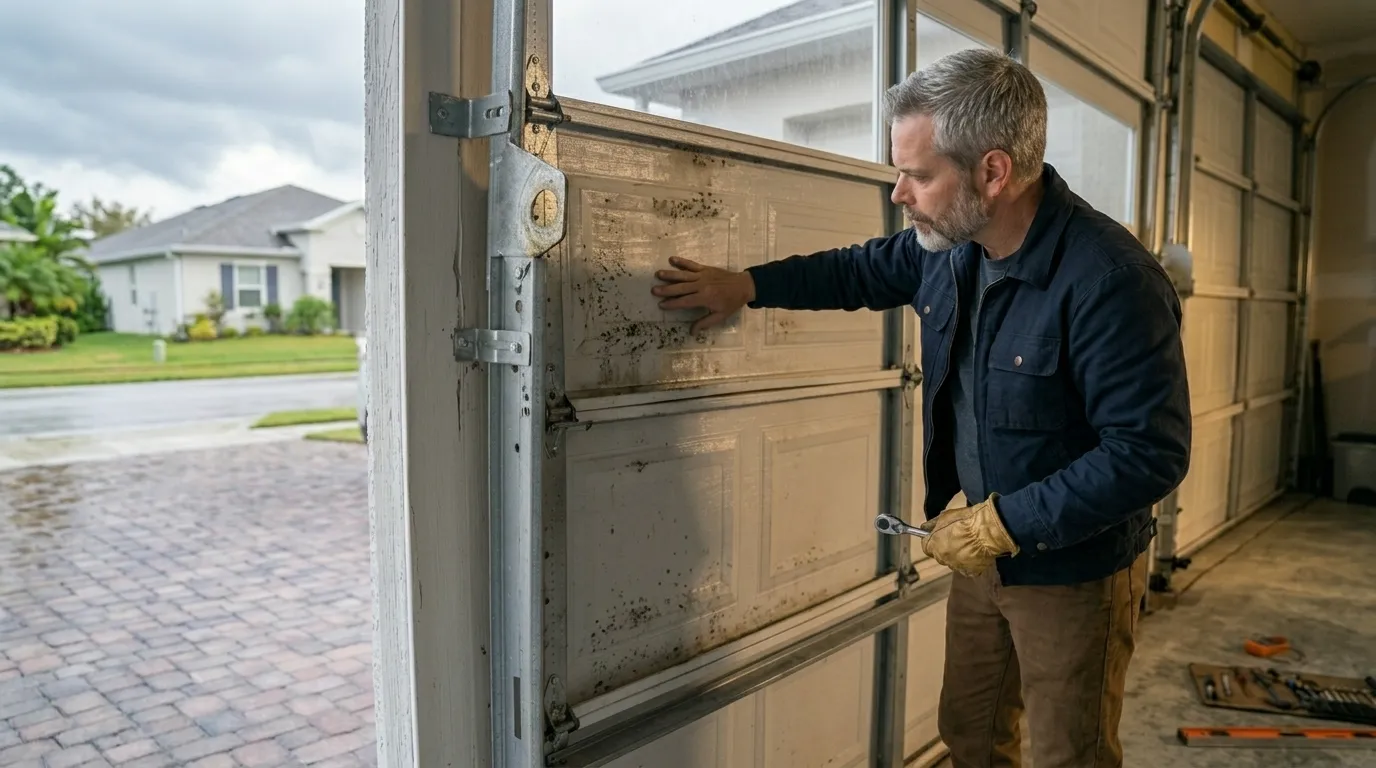
North Pekin's housing sits right at the area's median build year of 1965, which puts a large share of its roughly 657 households into that original-hardware window. It's a smaller pocket than some of the areas we cover from Pekin, but the pattern holds the same way: houses built close together in time tend to fail close together too, once the hardware hits its natural age. This area also runs a bit above the wider service area's median household income, which we mention only because it changes the calculus on repair versus replace - sometimes the better move for a homeowner here is a full hardware swap rather than patching one worn part at a time.
We're not based in North Pekin; we work it from Pekin, a short 3-mile run, so there's no depot or storefront to visit. What there is, is a decent read on what a door built in this era is likely to need, because we see the same year-of-construction pattern across several of the towns in this service area.
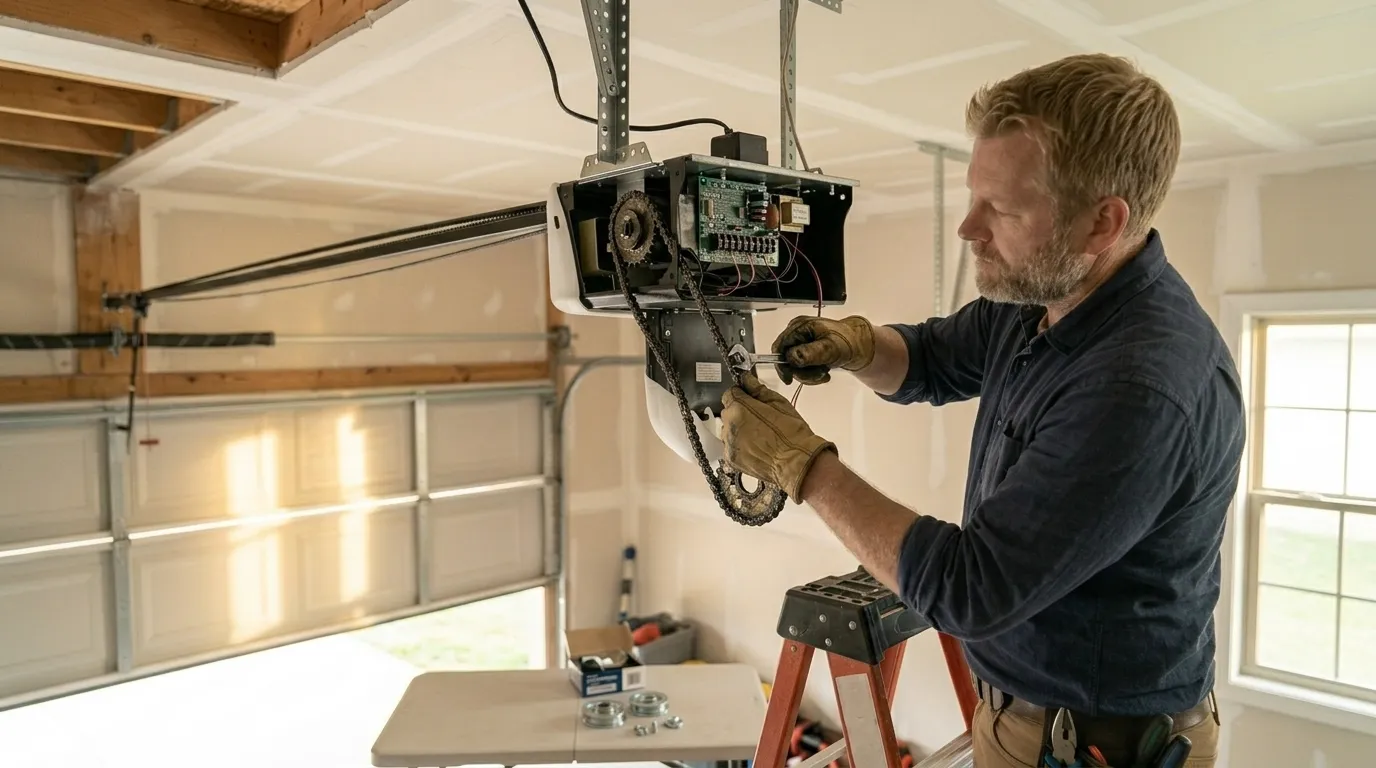
Talk to a North Pekin Technician First
Describe what the door is doing and get a straight answer on what it likely needs.
Other Garage Door Services in North Pekin
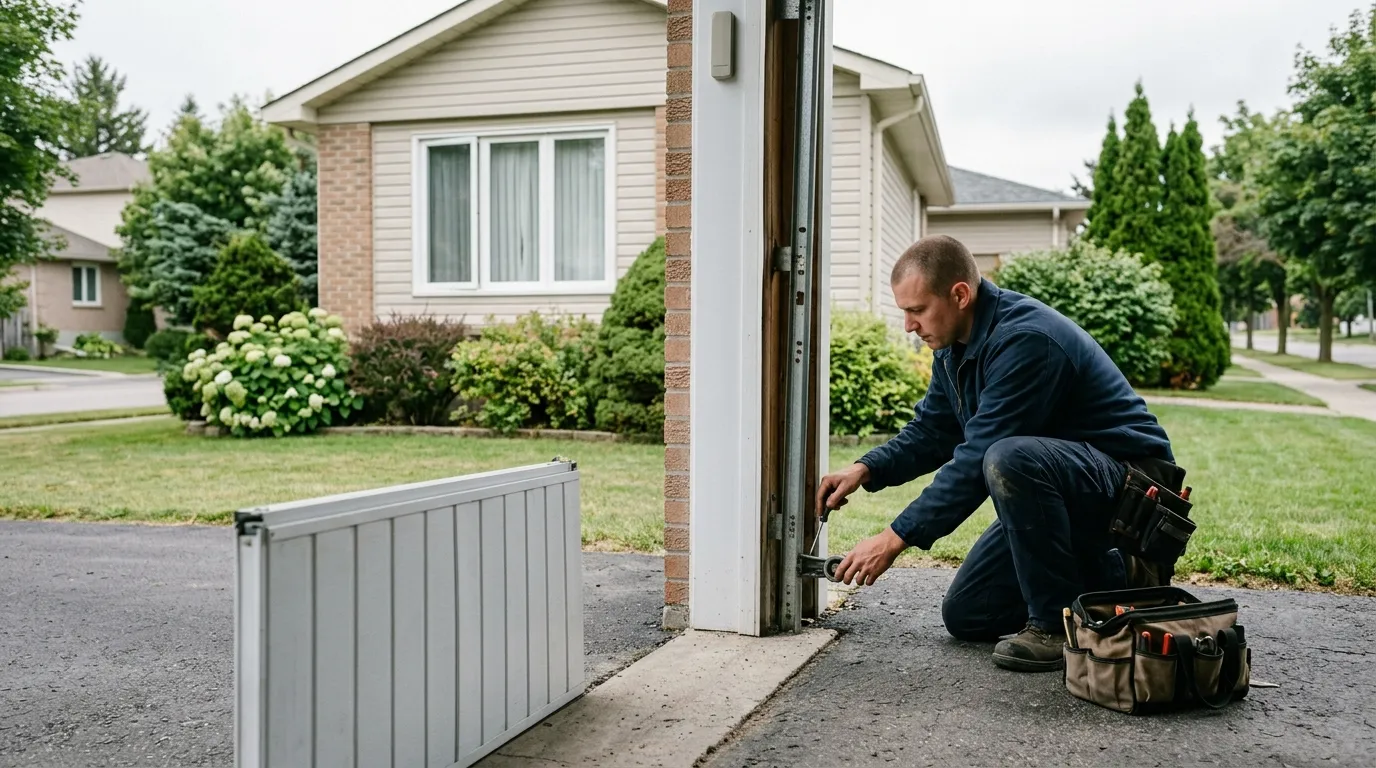
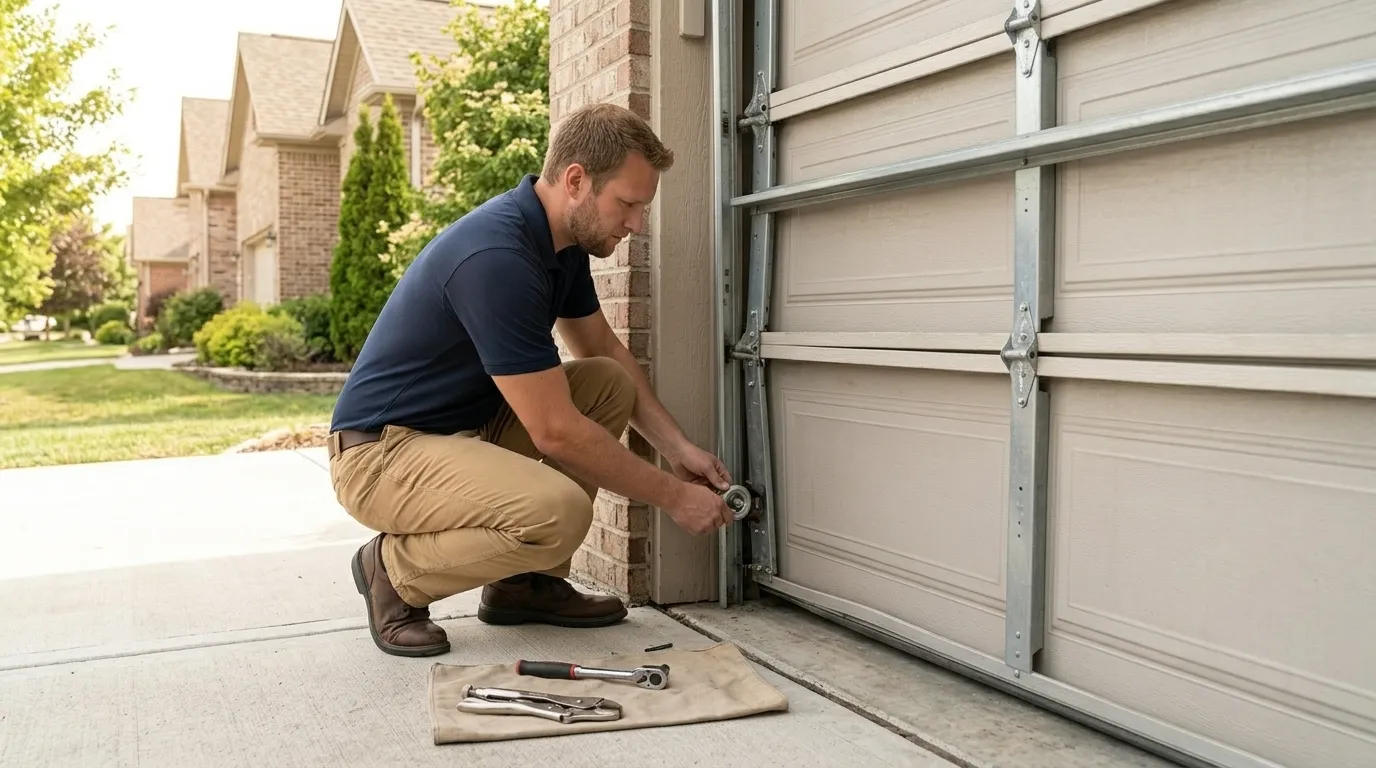
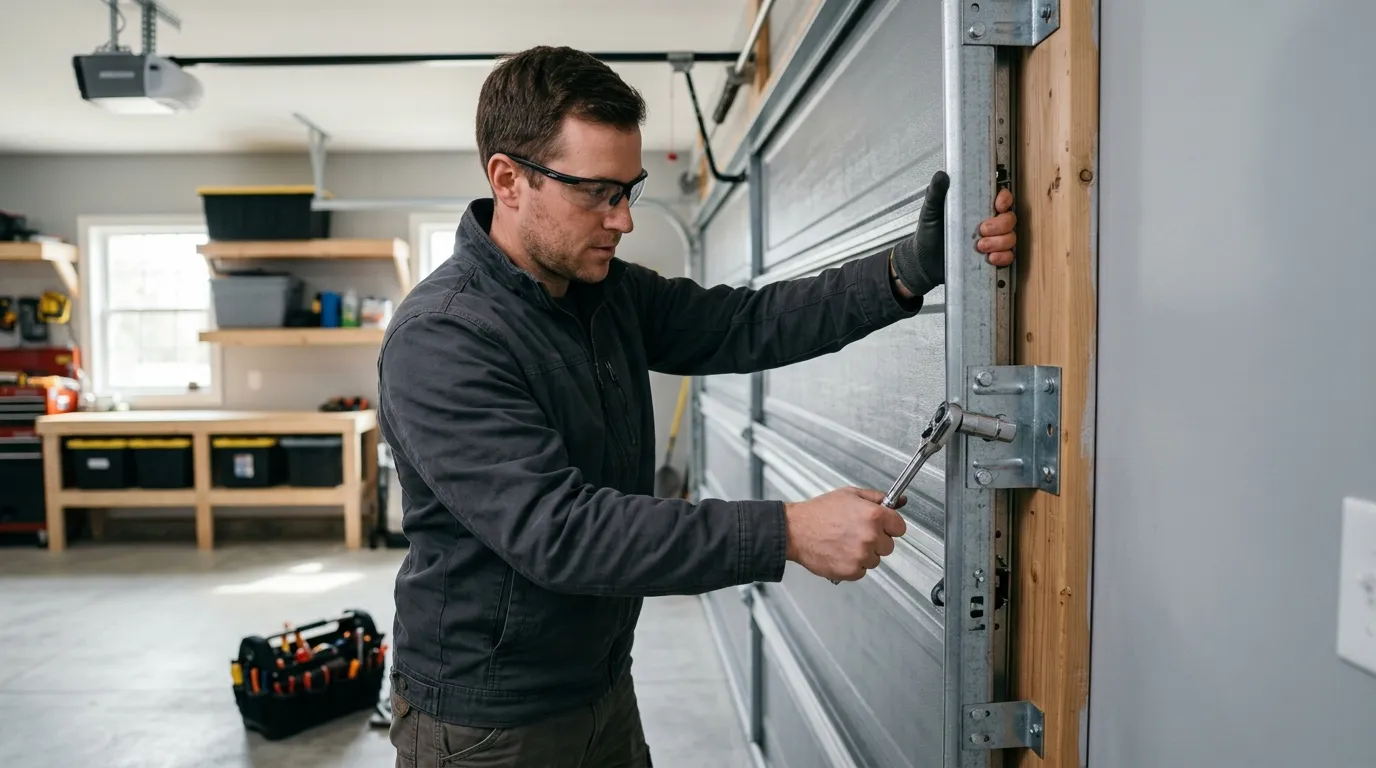
Recent Work in North Pekin
A look at jobs our crew has been on nearby.
Why North Pekin Calls Us
Frequently Asked Questions
Is my garage door hardware original if my house was built in the mid-1960s?
It's likely, especially if no one's mentioned replacing the spring or track. Many North Pekin houses date to right around 1965, and original torsion hardware from that era often runs another decade or two before it fails outright - but it usually shows warning signs first, like noise or uneven lift, before it breaks.
Do you have a shop in North Pekin?
No. We're based in Pekin and cover North Pekin from there, about 3 miles out. There's no local branch or drop-off point in North Pekin itself, just the truck coming from Pekin for the call.
Why does my door get worse in winter?
This area sits in a moderate-cold climate band, and steel torsion springs stiffen and lose a bit of flex in hard cold. A spring that was already marginal from age often finally gives out during a cold stretch, which is why winter calls on older doors are common.
Should I replace the opener or the door hardware first?
Depends on which is actually failing. If the opener strains but the door moves freely by hand when disconnected, the opener's likely the issue. If the door feels heavy or uneven by hand, the spring or track hardware is the real problem, and a new opener won't fix that.
Need Garage Door Repair in North Pekin?
Call now for straight answers on cost and timing.